01/07/24: content or process? A Christian approach to politics

Here in the UK the General Election campaign has been in full swing for some weeks now, with the election itself due this coming Thursday. During this time I’ve been watching the news, particularly asking myself, what distinctive contribution might Christians bring to the process? I’m aware that the below is a bit of a ramble, please bear with me, if you think it’s worth editing please let me know!

At the extremes of politics there are groups which would directly wish to cause harm to others. There are a whole series of examples over the last 100 years or so, and, I’m sorry to say, some evidence of that thinking cropping up over the last few weeks. Also, there can be a tendency to adopt political positions in order to advance one’s career rather than out of any conviction.

But in the middle of all this, politicians in general, of all faiths and none, of widely differing beliefs, do what they do determined to make life better for others. This might be a slightly naïve view, but at least at the beginning of politicians’ careers I think this is true.

Meanwhile, can we find support from the Bible for any particular view point? Yes, I think we can. To give one clear example: in both the Old and New Testaments there is concern for the poor and under privileged. Stephen, the first Christian martyr, was responsible for the provision to the poor and needy. Which, in political terms, points us to a classical left wing position, with high taxation and high provision of central services.

But against this, particularly in the Old Testament, wealth is regarded as a blessing from God. Paul exhorted slaves to work hard for their masters as if they were working for God Himself. Jesus came to bring the truth that we might be free. Freedom, I would suggest, includes the freedom to work hard, earn an honest living, then spend our money as we see fit. Which, in political terms, points us to a classical right wing position, with low taxation and low provision of central services.

Is there a specifically Christian way to resolve these opposing priorities? I can’t see that there is. Would I be happy to be in fellowship with Christians who are members of the Conservative, Labour, Liberal Democrat parties? Yes, absolutely.

The more I think about this, the more I come to the conclusion that the way Christians can bring a distinctive contribution to politics is not by subscribing to a particular set of policies but by the approach we take. Let me give a few examples:

But let your ‘Yes’ be ‘Yes,’ and your ‘No,’ ‘No.’
For whatever is more than these is from the evil one.
Matthew 5:37

Keep communication straightforward. Answer the question which has been asked. Do not shy away from points which may seem to damage your cause, which links to the next point:

If we claim to be without sin, we deceive ourselves and the truth is not in us.
If we confess our sins, he is faithful and just and
will forgive us our sins and purify us from all unrighteousness.
If we claim we have not sinned, we make him out to be a liar and his word is not in us.
1 John 1:8-10

We all make mistakes, we all do things wrong, we all make judgements which prove not to be correct. Concepts of confession, repentance, forgiveness, restitution and moving on are integral to the Christian message. Peter messed up badly by denying he knew Jesus, ultimately he ended up having a key leadership role in the early church. David messed up badly with Bathsheba, after a painful period of confession and repentance, including the death of a baby, he was able to continue as King. Owning up to things having gone wrong may be embarrassing in the short term but ultimately is a much more effective way of moving on in mutual trust and understanding.

Let your conversation be always full of grace, seasoned with salt,
so that you may know how to answer everyone.
Colossians 4:6

Be respectful of your political opponents. Whilst it may sometimes be appropriate to call out hypocrisy, eg. if politicians are talking about the importance of family values but then are having affairs, in general keep to the issues and don’t engage in personal abuse. Show an understanding of others’ points of view and explain why you don’t agree.

Honest scales and balances belong to the LORD;
all the weights in the bag are of his making.
Proverbs 16:11

But among you there must not be even a hint of sexual immorality,

or of any kind of impurity, or of greed,
because these are improper for God’s holy people.
Ephesians 5:3

Members of Parliament are the only people I can think of whose job means they necessarily have two homes. Clearly the financial arrangements facilitating this are going to be complicated. We need Christians in politics to be working to the very highest standards of integrity and probity in terms of expenses, consultancy work and the like. Coming back to the first point, if you need complicated language to justify yourself, something is wrong!

Thank you for reading to this point, as always, very interested in any responses you might have or other points which are worth making. At all times, and in all places, to our Almighty God be the glory!

17/03/24: teacher guide (2) do unto others

I hope you don’t mind, a bit of a bit of a change of tone in this part of the guide, can’t see a way of satirising the point I want to make and it’s one very close to my heart. As always, interested to know what you think.

At school we require students to use ‘Yondr pouches’, which are lockable bags into which students must put their smart phones, smart watches, ear pieces etc. first thing in the morning to then be unlocked as they are leaving school. Of course, the system isn’t fool proof, the locks can be broken, students can have a second phone, and doubtless a whole number of ways of which I’ve not thought. But the fact that locking phones away at the beginning of the school day is part of the routine means that, if a students is found with a phone out during the middle of the school day, the culpability level is that much higher. If teachers wish to do activities needing phones during the day, whether that be using subject specific apps or playing ‘Blooket’ which seems to be the current favourite, then we can unlock the bags, with the responsibility of ensuring that they are relocked at the end of the period and used only for the intended purpose. It won’t surprise you to hear that the latter can sometimes be a bit of a challenge….

On Monday of last week we were doing a periodic slightly more thorough check than normal, so I was making sure the locks worked. Bit of a challenge to find the right level of pressure which does a proper check but doesn’t risk breaking it, but think I succeeded. Afterwards, as I was restating the need for phones to be locked away, one of my tutor group said that he thought that teachers also should lock their phones in Yondr pouches. I agreed. I would have no problem at all in doing so – or leaving my phone at home, in my car, in a locked cupboard in the maths office, etc. Certainly I would not dream of using my phone in front of students in the normal course of things, on the one recent occasion when I wanted to do so – to contact somebody just about to leave the country – I asked the permission of my tutor group which they graciously gave, knowing that, should they need to contact somebody on an urgent basis, I would also agree.

I have, I’m afraid, been aware of adults using phones in front of students at times when they are not allowed to use theirs, and am really not comfortable with this at all. What is the justification for this? It is, of course, the case that students and teachers are in the classroom for two different reasons which means that, for example, I tell students to sit down and stop talking but would not allow them to say that to me. Can the use of mobile phones by adults be justified on these grounds? I really don’t see that it can.

So in everything, do to others what you would have them do to you,
for this sums up the Law and the Prophets.
Matthew 7:12, emphasis added

One of many things which irritated me when I was working in teacher training was reading personal statements from Christian applicants implying that because they were Christians they would make better, more committed teachers. I see no evidence at all that this is the case, any more than I see evidence that people who are older / younger / male / female / with children / without children etc. etc. make better or worse teachers, as a group, than others. But, speaking as a Christian who works as a teacher, it makes sense to me that I should bring a Christian framework to my chosen profession. I expect students to be polite to me? Then I will be polite to them. I expect students to work hard at their lessons? I will work hard at their lessons. They are supposed to be smartly dressed? Then I will be smartly dressed, particularly, when I have been working in schools which require students to wear ties, then I wear a tie. Actually, I take this one somewhat further, possibly too far – at a school when students weren’t allowed to wear short sleeve shirts in the winter, I didn’t either.

There are some grey areas here. There was a time when a female colleague was telling a girl off for wearing dangly ear-rings only for the girl, not unreasonably, to point out that my colleague herself was doing so. I can only speak for myself here – I am with the girl on this point. If you disagree, please do say so!

At the time of writing there is an indicative ballot going on as to whether teachers will take further strike action at some point in the not too distant future. Yet, I have been in assemblies, and indeed spoken to my tutor group from provided PowerPoints myself, about the importance of attending if at all possible, and the correlation between attendance and achievement. So, students, bring your cold with you, parents, do not arrange holidays during school time, students, work through any anxiety you may have, hugely exacerbated by the COVID lockdown it would seem to me. How can I look students and their parents in the eye about the importance of attendance if I myself am going on strike? Again, I realise that not everybody will agree with me, but I just can’t see it. Please do write with an alternative view, I’d love to hear from you!

So, I’ll continue wearing a tie, keeping my phone away, being polite, in general, acknowledging the difference in role between student and teacher, looking to do unto others as I would want them to do to me. I’m very aware I don’t get things right every time, do pray for me in this endeavour!

10/03/24: teacher guide (1) compulsory teacher clichés

There are two days at teacher training college which are of supreme importance, far above anything else learnt in the year. Deep sighing day and cliché day. All aspiring teachers need to learn how to sigh audibly, visibly, and with appropriate gravitas to convey the clear message – I am very disappointed in you and you know why!

And all teachers must learn an approved set of clichés then to use at the appropriate time. I’m concerned that some experienced teachers may have come adrift from this and are instead using some original phrases of their own. (Original? How did that dreadful word get into this guide?)

So, I am pleased to present a refresher course. Please read and take note carefully. If there’s any I’ve forgotten please let me know, I’ll be very pleased to add them to the list!

  1. In response to the question, “Can I go the toilet?” you must reply, “I don’t know. Can you?” This is guaranteed to get an appreciative burst of laughter no matter how many times students have heard it before. And you are helping to educate the next generation in the intricacies of the English language. Of course, the distinction between ‘can’ and ‘may’ is rigorously maintained in the entirety of the adult world, so we’re all working together to ensure that youngsters of today speak properly.
  2. In response to the question, “May I borrow a tissue?” you must reply, “Certainly not! I don’t want it back after you’ve used it!” This will again, get an appreciative burst of laughter, and is not at all wilfully obtuse or pedantic.
  3. In response to a student saying, “But they told me to do it!” you must respond, “And if they told you to put your head in the oven, would you do that?” This piece of wisdom will cause students to reflect on the error of their ways, repent and go forward in life sinning no more. I would point out, however, that not all students have grasped the concept of rhetorical question, so students may respond with something like, “Well, if the oven is off, I suppose that would be OK.” According to your mood, this is either hysterically funny / worth a faint smile / somewhat tiresome / misbehaviour somewhere close to mass murder. Respond accordingly.
  4. In response to questions such as, “Do I underline the heading?” or, “What do I do after I’ve finished question 1?” the issue here is not what you say but how you say it. Calmness, respect for the needs of the student and helpfulness are paramount. Under no circumstances do you sound sarcastic or as if you’re about to have a nervous breakdown.
  5. In response to – well, pretty much anything, really – respond, “When you ASSUME you make an ASS of U and ME.” Clever stuff, huh? From a linguistic point of view a complete load of nonsense, but clever nonetheless. Now, trying saying this key sentence out loud. Next, try saying it out loud without sounding deeply patronising. You see? Not possible, is it?
  6. In responding to students misbehaving and then trying to make out they didn’t do anything, you must respond, “Do you think I was born yesterday?” In all likelihood this bon mot will be entirely meaningless to your students, but say it with appropriate seriousness and hopefully everybody will forgot what has just happened and move on.

I think that’s all for now, as I say, do please let me know if there’s anything else. Let me know how your renewed determination to use appropriate clichés goes. Thank you for reading, I’ll be back again soon!

03/03/24: student guide (4) understanding teachers

Teachers were born middle aged. This is very important to understand. They did not have childhoods. They have never farted – and don’t actually know what this is. They never went to school as students – which helps to explain some of their oddities as explored in part 3 of this guide. They think we should remember what we learnt in a classroom after we left it! And that there are connections between subjects! And their subjects are useful in the outside world! Quite absurd, of course, but understandable and to be tolerated with as much grace as you can muster.

But not having been at school themselves means that they will have no knowledge of the marvellously inventive ways you can think of as to how to mess around. Put your hand over your mouth and whisper to the person next to you, teachers will have no idea what you’re doing! So if you’re doing this and a teacher remonstrates, feel free to go into an elaborate pantomime – that is, say in an exasperated tone, “What did I do?” with associated shocked body language – in the sure knowledge that the teacher is bluffing and really has no idea. This continues to be true no matter how long a teacher has been teaching.

Teachers cease to exist outside of school hours Either that or they stay in the school building, never to emerge. Possibly there are underground dormitories? So, if you see, or think you see, a teacher outside of the school building outside of school time, this is a thing of great awe and wonder! A teacher shopping in Sainsbury’s? How extraordinary!

If you are with your parents when you see a teacher, this is a matter of great calamity. Turn away from the teacher – which means, of course, that you can’t be seen. Do whatever you can to stop your teacher talking to your parents – it’s bad enough when this happens at parents’ evenings, please not at the weekend! Hopefully the crisis moment won’t last too long.

It is quite different, of course, when you are with a group of friends. Greet your teacher like a long lost friend. Remind them of the last time you were in an altercation in their presence, teachers will really like this. Comment loudly on their choice of deodorant or anything else in their shopping trolley. Keep this up for as long as possible – but probably better not to wait for the teacher to find a security guard to rescue them.

Teachers give detentions and other sanctions because they are vindictive It seems that teachers think that there is a connection between student behaviour, or amount of classwork or homework done, and the punishments they give. Huh! Every student knows that punishments are given out of malice in a totally inconsistent and random manner, according to how the teacher feels at the time. So make sure you protest loudly whenever given a detention or other punishment, demand an explanation but don’t listen to it if given, continue to protest the unfairness of the situation whatever you might have done. You may have done no homework for the third week in a row, you may have written a title but nothing more in class, you have thrown the pen of the person sitting next to you across the room, what does any of this matter? Other people have done much worse, haven’t they? Clearly any punishment is unfair and irrational.

There are different types of teachers There are the old, the very old and the extremely old. The irritable, the very irritable and the extremely irritable. The humourless, the very humourless and the extremely humourless. The unfashionable, the very unfashionable and the extremely unfashionable.

Unfortunately, not all teachers understand this. Some think they are ‘young’, and even use words like ‘cool’ and ‘hip’. Yuck, yuck and more yuck! Nobody says these things any more! And even worse, teachers may think they are funny, make jokes and expect us to laugh. Why on earth would they do that? They don’t find our jokes funny, do they?

In summary, teachers are a separate breed to be treated as such. Understanding them helps you to manage their behaviour in the classroom. But that is a matter for a future part of this invaluable guide.

25/02/24: student guide (3) going from room to room

One of the facts of secondary life, of course, is that students go from room to room for their lessons while teachers mostly stay where they are. For some subjects – food, technology, science, PE – this makes sense, but for others it doesn’t. Wall displays get changed about every 10 years so that wouldn’t be a reason. Maybe teachers are lazy? Think we need the exercise more than they do?

But going from room to room, teacher to teacher, offers great opportunities for students to show their inventiveness. No need to rush between lessons, after all, teachers wouldn’t want us to arrive as hot sweaty masses, would they? All of the setting up and clearing up issues described in part one of this guide can be engaged with all over again. You’ve wound your teacher up to nearly breaking point in one lesson? Fantastic! You can start all over again in the next!

It is, of course, important to remember that what is learnt, eg. in the French classroom, stays in the French classroom. Unfortunately, not all teachers understand this. So, you go from a French to a mathematics lesson, the teacher asks what you’ve just being doing, you say French, and the mathematics teacher tries to speak French to you. I mean, how ridiculous is that? Everybody knows you only speak French in French lessons. They don’t even speak French in France – at least, not the places you go to on day trips, they all speak English just as everybody else in the world does. Clearly, everything learnt in French is instantly forgotten the moment you go out of the door, to be remembered (well, probably not actually) in your next French lesson.

Teachers sometimes try to make links between their subjects and others, really don’t understand why because clearly every subject is completely separate. The graphs you draw in science, for example, are completely different to the graphs you draw in maths. Maths teachers may make you do calculations without a calculator but clearly calculators are absolutely essential for anything at all involving numbers when you’re doing eg. food or geography. Although this may present an opportunity to whine at your maths teacher that they’re inflicting pain and suffering quite unnecessarily, after all, the geography teacher doesn’t!

But, worst of all, teachers may try to persuade you that their subjects are useful in everyday life. What a load of nonsense! Whoever in their right mind does a calculation outside of school? Or worries about adjectival phrases (whatever that means)? Or composes poems whilst waiting for a bus? As for oxbow lakes….. or non-diegetic music? No need to worry about different strands in the Muslim faith if it isn’t in the syllabus for the RE GCSE!

What is learnt in any one classroom stays in that classroom, to be immediately forgotten on stepping out, possibly to come out of cold storage in the next lesson of that subject. Students of the world unite! There are some things too important to leave in the hands of teachers, who clearly were born middle aged, never went to school themselves, otherwise they would understand these realities of life.

18/02/24: learning from Balaam

No getting around it, large parts of the Old Testament make for difficult reading for the modern Christian. Reading through the Bible in a year (this year reading 3 or 4 chapters a day going continuously from Genesis to Revelation) I’m currently at the end of Numbers / beginning of Deuteronomy. Situation: Moses is in the process of handing over to Joshua as the Israelites prepare to occupy the promised land. They are on the east side of the Jordan – with some of them wanting to settle permanently there – ready to cross the river, get rid of the current residents either by sending them away or killing them and make new homes for themselves.

It’s particularly the last part I find hard. However much we believe in God’s almighty purposes running through this narrative, surely it’s appropriate to spare a thought for the original occupants? How would I feel if people came knocking on my door and said, “God has told us to occupy your house, so get lost or we’re kill you.” Disbelieving? Angry? Defiant? Certainly I’d be straight onto the phone to the police!

From a human point of view – certainly MY human point of view – it is difficult if not impossible to understand why it was necessary for the Israelites to inhabit land which was already occupied. Surely there were other possibilities within walking distance? Walking distance in this case being a rather long way, we are, after all, talking about people who had been on the move on-and-off for 40 years! And, at risk of stretching the point, can I suggest that the current Gaza crisis has its roots right here, 4000 years ago, with 2 or more opposing ethnic and cultural groupings believing with every fibre of their being that the same geographical landmass belongs to them.

I’d love to hear from you if you can explain this point. Meanwhile, I suggest that there is a time to think, question, probe, analyse, discuss – and there’s a time to say that God’s ways are not our ways, ultimately we cannot expect to understand His mind which is infinitely superior to ours. We need God’s wisdom to distinguish between these, for the time being, I am of the view that God’s reasons for sending the Israelites to a land already inhabited falls into the latter category, we have to trust in His almighty purposes even when they make no sense to us.

In the middle of this appears the most extraordinary and complex character, Balaam. In Numbers 22 King Balak of Moab sends for Balaam. The King, as he might well be, is very concerned about the Israelites camping at his back door, and wants Balaam to put a curse on them, which the King believes will enable the Moabites to win. Clearly Balaam has quite a reputation as a prophet! But here is the most extraordinary thing. As we discover later, Balaam is no friend of the Israelite people. He nevertheless knows God’s prophetic voice and is compelled to speak God’s response that the Israelites have His – God’s blessing.

The well known story of Balaam and the talking donkey comes up at this point, it would appear that God’s voice was very clear to Balaam and no further discussion on this point was appropriate, he should not therefore have proceeded further. So even though God tells – allows? – Balaam to go back to Barak, he should not have done this – as the donkey helpfully tells him. It would seem to me that there’s a parallel in 1 Samuel when the Israelites ask for a king and God says no, He – God – is the king, what are needed are judges. When the Israelites persist, God in effect says, OK then – but on your heads be it.

There then follow a series of prophecies when Balaam continues to speak God’s blessing on the Israelites, much to the consternation of King Balak, the Moabites and doubtless many others around getting to hear about this! Balaam appears again in Numbers 31 when he is killed in the war against the Midianites. It then becomes apparent, verse 16, that, whilst he knows that the Israelites have God’s blessing, he has been actively encouraging inter-marriage between the Midianites and Israelites, in direct contravention of God’s command in keeping the Israelites separately and holy. It would appear that, as a person to whom God spoke, Balaam had somewhat selective hearing!

Balaam appears on a further 6 occasions in the Old Testament and twice in the New, largely in the context of sin. As far as I can make out, there are two here, one is persisting in seeking God after God had already spoken very clearly, and the other is looking to undermine God’s purposes in encouraging inter-marriage.

It would seem to me that an understanding of Balaam encapsulates two of the three reasons I can think of why people would not have a Christian faith. The first – which absolutely does not apply to Balaam, quite the reverse! – is lack of belief in the teachings of the Bible. There are, of course, many many reasons why this should be so, including lack of knowledge or understanding, indifference, adherence to another faith. Whilst most people I have met over the years who do not profess a Christian faith are quite happy to respect the fact that I do, I have on occasion met direct ridicule as people have torn central tenets of the faith to pieces. St Paul would, I think, sympathise here, teaching that the gospel is ‘foolishness to Gentiles’ (1 Corinthians 1:23).

The second is because the cost of discipleship is too high. Balaam actively encourages this view as he tries to get Israelites and original inhabitants to inter-marry. We see this also in Jesus’ ministry. In Mark 10:17-22 a rich young man shows a clear desire to follow Jesus – but is not prepared to give up his wealth. Do we know people who demonstrated a Christian faith but came away for this reason.

The third reason, which does not arise directly or indirectly from this passage, is poor experience at the hands of Christians, either as individuals or part of institutions. How many people have attended Christian schools and up with a poor opinion of the faith as a result? One maxim I came across once – I often have to apologise for Christians, I never have to apologise for Jesus Christ. There is, I think, a very important truth here – but this does not let Christians off the hook as we look, in our personal and professional lives, in our churches and other institutions in the name of Christ, to reflect His glory and saving power.

If you’ve read this far, my heartfelt thanks! Aware that it’s a bit of a ramble, if it generates any interest I’ll come back and edit. Any thoughts gratefully received, meanwhile, may you know the blessing of our Lord Jesus Christ today and always.

11/02/24: student guide (2) key terminology

‘Sorry’. This is a great word. Simultaneously magical and meaningless. Magical because it can get you out of a great deal of trouble. And it doesn’t necessarily matter exactly how you say it, if challenged you adopt a pained expression and say, “But I said I was sorry.” Meaningless because it commits you to no further action, no change in your ways, nothing. Fantastic!

‘What about him?’ It is, of course, entirely unreasonable that you should be expected to take your coat off / get your exercise book out / turn to the relevant page in the textbook / etc. etc. etc. when there is somebody – anybody – else in the room who has not done so. How can that be fair? So bring to your teacher’s attention those who are also not doing as they should. And your teacher will be very grateful. Well, they will be if they’re reasonable, unfortunately, not all teachers are. Any apparent contradiction with the point in part 1 of this guide that you only listen to individual instructions is for teachers to worry about. After all, isn’t that what they’re paid for?

‘Yeah, but….’“You are late to this lesson.” ’Yeah, but….’ ”You haven’t done your homework.” ’Yeah, but….’ ”You are talking over me.” ’Yeah, but…’ This key phrase in student terminology in effect means: I accept the general point you are making, but there are particular reasons why the general principle does not apply to me at this precise moment in time. Continue the explanation for long enough and your teacher is likely to forget the original problem and move on to the next thing.

‘What did I do?’ Your teachers were, of course, born yesterday, and have never before seen the marvellously clever ways you have devised of misbehaving. They know nothing about body language so all misbehaviour must be communicated orally. Since they are looking after groups of 30 they are completely incapable of working out what you yourself were doing. If possible, continue this conversation until the teacher has forgotten what the original point was.

‘Why?’ Very young children learn fairly quickly that this is a word which means that a conversation can be continued indefinitely with no action. ”Please put your shoes on.” ’Why?’ ”Because when we go out you’ll need them.” ’Why?’ ”Well, it’s cold outside and without shoes your feet will get cold.” ’Why?’ You get the idea. No problem in bringing this concept into the secondary school. Anything the teacher says, no matter how often the school rule has been repeated or obvious the point, can be met by this great word. Repeat as often as necessary.

‘What’s the point of this?’ Teachers will, of course, be thrilled that you are engaging with the philosophical core of their subject. This question is best asked when they are already busy and stressed and thinking about 16 other things.

‘Can I borrow a pencil?’ Actually, the point here is not the precise question but the timing. Your teacher has spent the last three lessons organising interactive activities building up towards Pythagoras’ theorem. They are just about to come to the grand reveal and – now is the time you ask your question. You might find the teacher is not best pleased, but well, whatever, they get paid anyway, don’t they?

I’m sure there are other items of key student terminology, please do let me know. Thank you for reading!

04/02/24: Student guide (1) how to waste time without getting into trouble

A belated new year to you, trust 2024 is bringing all you wish for and more. After a bit of a gap I’ve a few ideas for blog posts so hope you enjoy. If you wish to encourage me – or think I’ve missed anything in the blog below – do let me know! Enjoy.

Come into the classroom with your coat on and your bag tightly zipped up. Cardinal rule: any instructions the teacher gives apply to other people unless you are specifically named. So, wait until you are specifically asked to remove coat or take equipment out of your bag.

When this happens, you need to work out the slowest speed at which you can carry out these arduous tasks without getting into trouble. One key thing to note is how busy your teacher is: the busier your teacher is, the slower you can be.

Some prior preparation is required to ensure that, when you have finally opened your bag, any equipment you need is right at the very bottom of an overfull bag. Days on which you have PE are ideal in this regard. In fact – why not bring a PE kit with you everyday? Who knows when a PE lesson might be sprung upon you as a nice surprise?

When you have found your retractable ball point pen, take a moment – well, as long as possible, really – to admire the fine piece of engineering your pen undoubtedly is. Take it apart to work out how it works. Should the cartridge explode, or the spring go flying across the room, is that your fault? It is a well known fact that pens have minds of their own. You could go after the spring – or ask to wash your hands – which would, of course, be in the spirit of wasting time but mean that the teacher’s attention is attracted towards you which could curtail further attempts to waste time. So, on balance, probably better to accept the fact that your pen is unusable and sit doing nothing awaiting further instructions.

By this time it is likely that the introductory activity is over and the teacher is introducing the next topic. Which gives you the chance to day dream. There is the faint possibility of the teacher unexpectedly firing a question at you which will, I’m afraid, cause a moment of discomfort. The thing to do here is look pained and confused – I’ve been working so hard to follow you but this is all too difficult! In all likelihood this moment will be short lived, the teacher wants to keep the lesson moving along, after all, and will probably ask another student. You will need, I’m sorry to say, to pay attention for the next few minutes as the teacher may well ask you another question shortly afterwards. Alas, no method is fool proof.

When the teacher says something like, “Open your textbook to page 213 and do exercise 3M starting at question 1,” you will, as mentioned above, be waiting to be told by name to do this, general instructions are for other people. Beyond this, it is important to understand that what the teacher really means is, “Open your textbook to page 213 and do question 1 of exercise 3M, under no circumstances go onto question 2 until given further instructions.” And please remember, your teacher is a busy person, no need to tell your teacher when you have finished question 1, your teacher has many other important things to do rather than to deal with you.

Few other pointers at this stage in the lesson. If your teacher is operating a queueing system to give individual help, choose a time when the queue is pretty long and join it, if necessary with an exaggerated air of bafflement and eagerness to understand the point of confusion. But then, when you are almost at the front of the queue, suddenly realise – no, actually, I can do this! And sit down in triumphant satisfaction. Only to realise a few minutes later, no, you were right in the first place, go back to the queue – which, of course, means the end of the queue. Repeat as often as you can get away with.

If the teacher is not operating a queueing system, it is worth seeing if you can doodle in a manner which looks, from a distance, if you are actually doing work. Again, the busier your teacher is the more likely this is to work.

Of course, it takes a full 15 minutes at the end of the lesson to pack up and get ready to go, so no reasonable teacher will expect any work to be done at this stage. We will in future posts be examining the question as to how to manage the behaviour of our teachers, for the moment we need to be keeping below the radar, if necessary, profess ignorance as to the ending time of the lesson and claim you thought it was earlier. Alas, not all teachers are reasonable enough to understand this crucial point.

With sustained effort and practice the methods above should mean that you need not work for more than 5 minutes in any 1 hour lesson. Try not to be disappointed if you need to work for longer than that initially as you perfect your time wasting skills. I would say that this guide is a ‘work in progress’, if there is anything I have missed, please do let me know. Meanwhile, thank you for reading, I trust this is helpful as you learn how to cope in the classroom, doing minimal work but avoiding trouble. Until the next time!

01/08/22: welcome to all my new Facebook friends!

Since my last Facebook post I’ve arrived back in the UK, sorry to leave Uganda but also pleased to be back. Really helpful to have a bit of a gap before starting to work again, corresponding to only a 2 week gap 2 years ago when going to Uganda.

But the thing uppermost in my mind at the moment is Facebook. Partly because I only started using the Internet in adult life, I’ve been very clear that I only post things which I am happy for absolutely anybody to see, I don’t trust any anonymity of any form. And indeed, have had reason when working as a teacher trainer to speak with students who had posted things embarrassing to them, the University and / or their placement school.

The flip side of this is that, for as long as I’ve been using Facebook, I have been very happy to welcome anybody – well, almost anybody – as a Facebook friend. Why not? Everything on my profile I’m happy to be in the public domain, if you want to be my Friend, that’s fine by me.

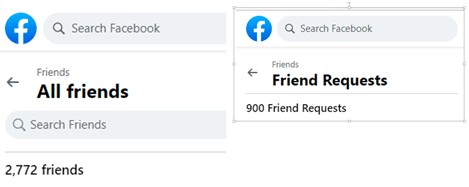
And this approach has worked well for me for quite some years, until the middle of last week. When suddenly, for no particular reason of which I am aware, the number of people sending me Friend requests has exploded. Watching them come in has been a great geography lesson – East Africa, Pakistan, India, Bangladesh, Ghana, Liberia, Malawi to name but a few. So, to all my new Facebook friends, a very warm welcome!

This explosion has come at a point when I have some time on my minds, which is just as well, Facebook right now could be a full time occupation. Also, I’m actively thinking about how to support ministries across the world which tend to go below the radar of large aid organisations, so I have an opportunity to make contact with many people across the world doing an absolutely amazing job in Christian ministry, particularly with children, often in extremely difficult circumstances.

You’ll appreciate that I am faced with a number of challenges right now. Some are technical. The limit of the number of Facebook friends is 5 000, so I can continue welcoming more people for a while yet. I have also discovered that the limit for the queue of people requesting to be friends is 1 000, after which people are deleted from the bottom of the list. So apologies to anybody whose request has got lost for that reason! Also, I have discovered that if I accept too many too quickly, I get an error message and have to stop for some hours. Although I am checking profiles before saying yes, I’m particularly looking for Christians and / or people working with children, as the numbers are increasing so I’m applying these criteria more rigorously. I have learnt to send messages with the sound on my computer switched off, otherwise, every time a message arrives, there is a pinging sound. Somewhat disconcerting to be getting 3 messages arriving in the time it takes me to answer 1, so better not to know in the short term!

I’m extremely aware that, when I start working again in September, I am not going to be able to spend anything like the amount of time on Facebook that I am at the moment. Haven’t sorted this out yet, it may be that, with considerable regret, I’ll be using Facebook largely as one sided communication, any advice on this point gratefully received!

Three things I would like to say to my new Facebook friends, having been doing this for a few days and having scanned many of your pages. Firstly, please be patient with me, if you send me a message it may take me a few days to get to you. Allied to this, if there’s something you wish to discuss, the more you say upfront the better, greetings are lovely but having exchanged greetings your next message goes to the bottom of the queue for an answer. Please note also that I am only happy to communicate in writing for this purpose, I will not answer any phone or video calls.

Secondly – think carefully about what you put on your Facebook page, assuming that everybody can see what you’ve posted, and that any reposting is of material you are happy to stand by in your own name. It has been disconcerting to see a large number of highly questionable posts on the pages of people with a clearly expressed Christian faith headed things like, “Only view if you’re over 18” or “How can this possibly be allowed?” With great love in my heart I say – if you wish to wage a campaign against pornography, this really isn’t the way to do it!

And thirdly, I’m currently thinking and praying about how to support ministries across the world which go below the radar of large aid organisations, but am a long, long way from implementation. In the meantime, I am already fully committed to a number of giving projects and really not in a position to take on any more. Really, really sorry, understand the need, but I am having to say no to everybody right now.

So, not sure where this is heading but really enjoying reading the messages, seeing photographs and videos of work going on across the world, and praying for some of the needs that come up. I take comfort from Malachi 3:16a: “Then those who feared the Lord talked with each other, and the Lord listened and heard.” I love this idea that God listens to the conversations of His servants as they discussed how to honour His holy name and, in effect, treats those discussions as a prayer. Similarly, I ask that our Almighty God accepts my responses to my new Facebook friends as a prayer for them. Realistically, I can’t spend very long on any one message, and like to that that short amount of time is, in effect, a prayer for the work going on.

25/06/22: return to the UK, the countdown is on!

My two year stint in Uganda is coming to an end. So wonderful to be here! Students and colleagues have been fantastic, really appreciated the opportunity to get to know some wonderful people running homes for vulnerable children, I’ve met Stanley the artist, engaged with a lovely church, all in the Pearl of Africa, a description as true now as it was when Winston Churchill first said it in 1907.

But all good things must come to an end, and really delighted to be going back to a 4 day a week, one year post at an Oxfordshire 11-18 school which means I can be close (not not too close) to parents to which I’m really looking forward. Initially expect to be using the 5th day to keep up with rather larger class sizes than I’ve been having recently, thereafter, not quite sure, although I’m keep to pursue an idea as to how to bypass large aid organisations, still very sketchy but would love to discuss it if you’re interested!

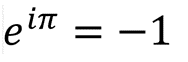
So, the count down is on. Said my good byes at school. This included a skit where one of my outgoing A level students – curiously, the one girl in the group with very long hair – was my alter-ego enthusing over the equation:

Then, when one of the other students said, “Ah yes, the most beautiful equation in the whole of math,” my alter-ego snapped, “It’s not math! It’s maths!” All of which is entirely accurate, I have to concede. Have a lovely card from my home room (tutor group) which I will keep carefully plus some very nice messages from colleagues and students I’ve taught over the last two years.

Perhaps the one thing I will miss more than anything else is the Christian ethos of the school. My last lesson was with my Grade 9 (Year 10) class, at the beginning of which I read a Bible verse and prayed as usual. At the end of which I said, “You know, that might be the last time in my lifetime that I’ll open a lesson in prayer.” And they looked at me, puzzled, as if to say, “But surely in every school you open lessons in prayer.” Ah no, not so – but entirely normal to you, of course. I’ve loved the opportunities to speak in chapel – and also in assembly at my previous school – and have been trying to remember the last time I gave anything other than a Christian address in a school assembly. Note to self – if asked to speak in assembly in future, get a colleague to check a draft through first, this is going to be a bit of a transition.

So, the count down is on. My Ugandan bank account is closed. My piano has gone for safe keeping to friends at God’s Love Home and School which I visited this week, getting students to do calculations based around the Queen’s age and the length of her reign. Also I visited Kampala Christian Orphanage to be met by a huge number of children, many of whom go to school there but live in local villages, chickens, rabbits and a new building project for 4 new classrooms, a medical room, a computer room and some offices. I’m hoping to get to Little Souls Ministry in Kawaala, North West Kampala, before I go but Bridget, the director, is still recovering from an assault some weeks ago now so that may not be possible.

One of my regrets is that it has not been possible to go to Goma, Democratic Republic of Congo, to visit Justin and friends at Youth Initiatives for Sustainable Development. As the crow flies it is only 270 miles from here, however, travelling by road is difficult, taking risks on my own behalf is one thing, but very aware that a white face may well attract attention putting others in danger. There’s no direct flight and internal flights in Africa tend to be very expensive mile for mile compared with other parts of the world.

So, Justin and friends, so sorry not to see you in person! I feel that I know you well even though we’ve never actually met. You live in a beautiful part of the world and do a magnificent job in extremely difficult circumstances. Not only did you bear the full brunt of a volcanic eruption back in May 2021, there has been much fighting both in Goma and close to you, with many displaced coming to your town. Several times over the last year I’ve tried to imagine what it is like to have very little and be really struggling to make ends meet, then to have a large number come with even less than me in desperate need of help. What is the appropriate Christian response? I genuinely don’t know and, as reflected in this blog post very aware that you need God’s wisdom to act according to His will.

Perhaps the most difficult good byes are right here in the four plex where I’m living. Denis and Emmanuel, our askari (security guards) have become friends which has been great. Big Boy, my 5 year old neighbour, regularly marches into my house unannounced and has given rise to a number of Facebook posts which I have found amusing, hope you do too! A few days ago I suggested that, when I go back to the UK, we can talk by WhatsApp. At which he looked puzzled and said, “But that won’t be until I’m grown up.” Ah, no, some miscommunication here. And good bye Pass, the compound dog, it will surprise some people who know me when I say that I’m now considering having a dog in future having got to know you.

This coming week I’m off to Arua, north west Uganda, to visit Angucia a student from Dar es Salaam. Then a few final days to leave everything straight at school / pack / go to final doctors’ appointment / cancel my work visa / put anything I want in the UK not coming with me on the plane into the post / etc. etc. Due back in the UK on July 5th. Am committed for this coming academic year, but after that, really don’t know. Part of me would love to come back out here if the opportunity arises. At all times and in all places, to our Almighty God be the glory. Thank you for reading and, if you’re in the UK, hope to see you soon!