One of the many pleasures of living here is being within walking distance of Lake Victoria, according to Wikipedia the third largest in the world after the Caspian Sea and Lake Superior. As can be seen in the map below the shores are in Uganda, Tanzania and Kenya with Rwanda, Burundi and the Democratic Republic of Congo not far away:
And the walk is mostly along a train line! Particularly from visiting my parents when they lived in Ilfracombe, North Devon, I’m well used to beautiful walks along trainlines. However, in the UK this means former train lines with the tracks removed. Here you really are walking along the trainline:
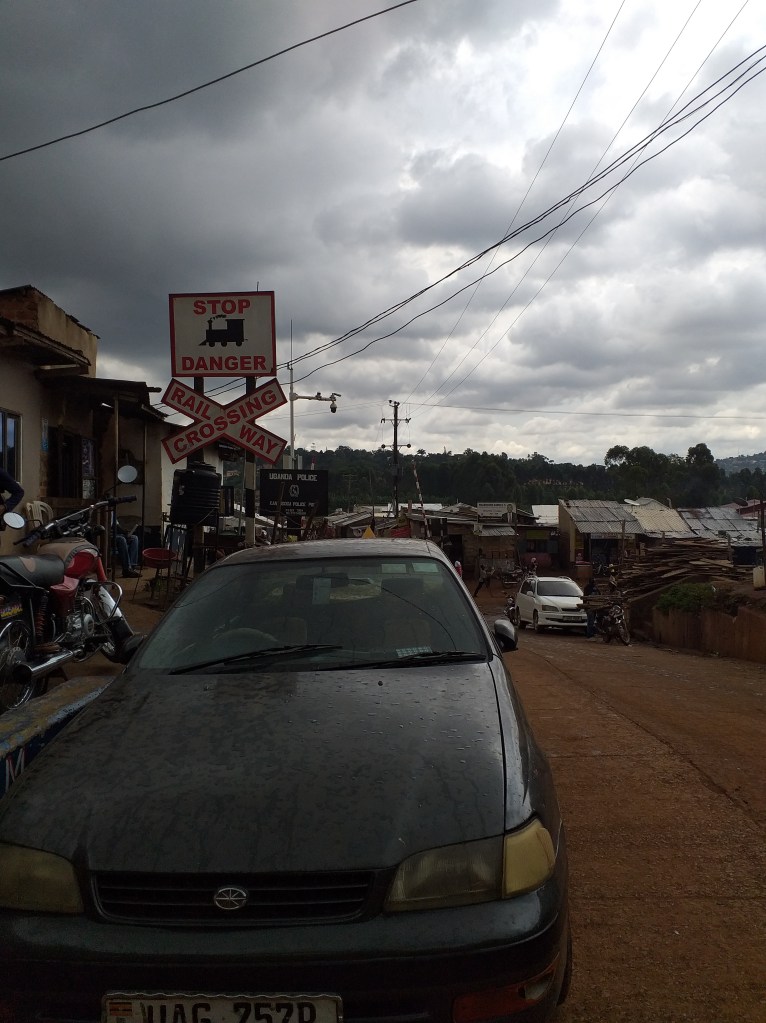
Which connects up Lake Victoria to the centre of Kampala. The train line is in regular use – I hear the whistle being blown about twice a day from about 10 minutes’ walk away, very glad that I’m no closer for the sake of my ear drums, although lots of people live and work right along the tracks, nearest picture I have showing this is below:
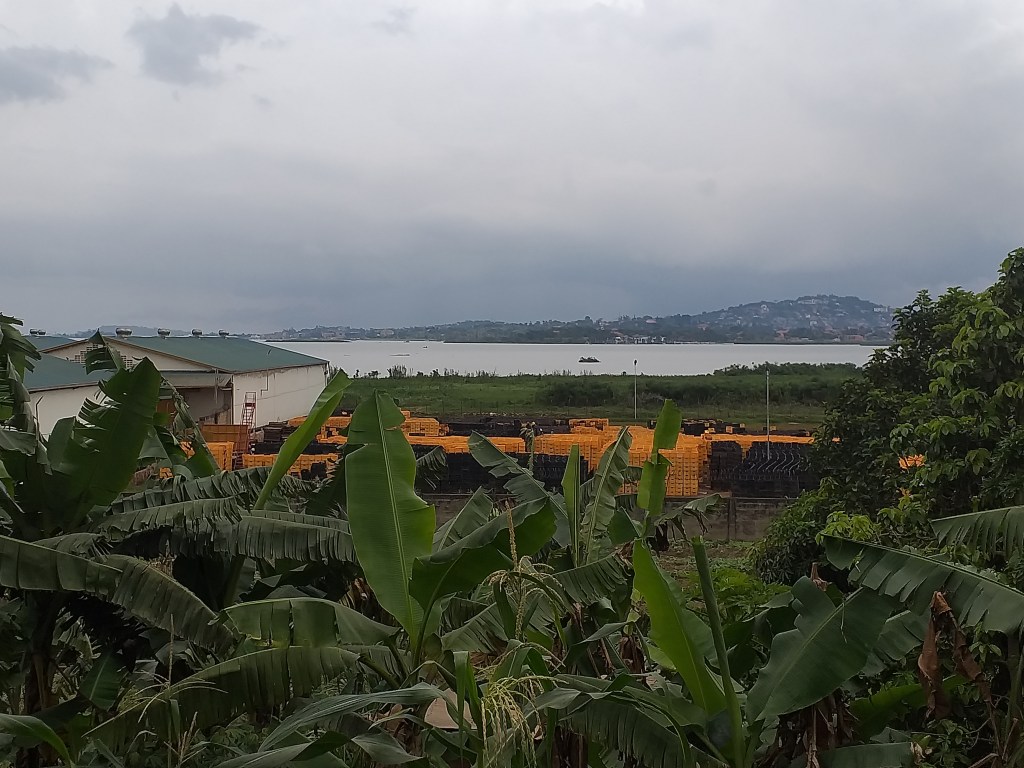
The scenery along the walk is pretty spectacular, not sure the pictures below really do it justice:
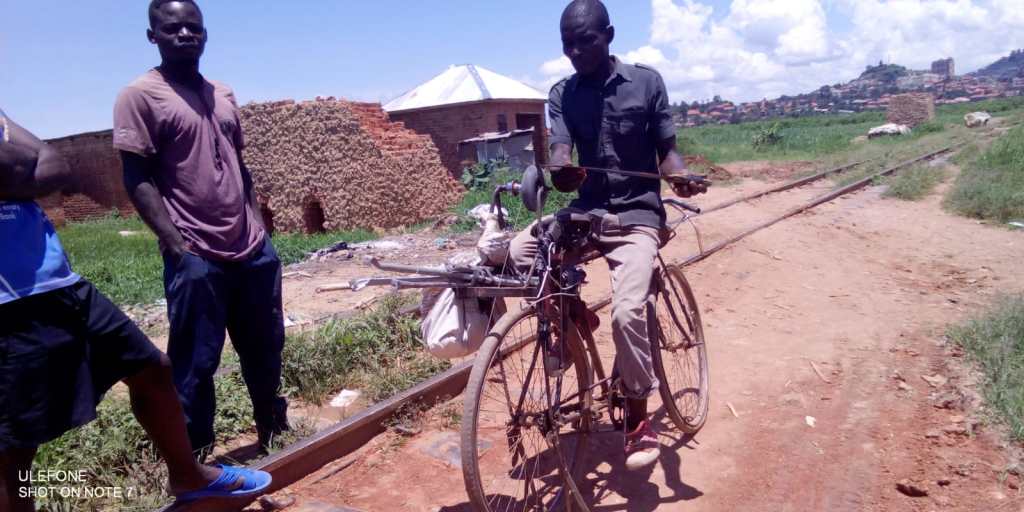
It was walking along the tracks that I discovered an ingenious method of sharpening knives:
I don’t know how clear this is from the picture, the bike is back to front with what is supposed to be the back wheel in front and lifted up, so as the cyclist turns the wheel there is a connection to spin the sharpening wheel. Clever stuff, huh?
At the end of the work I come to the village of Port Bell, the sheer size of Lake Victoria means that it’s not surprising that it feels as if you’re on the sea shore:
I’ve fallen into the habit of timing my walks to Lake Victoria to arrive in time for lunch, fish and chips Ugandan style!
I could then walk back, since there’s no clear alternative route I normally then take a boda.
It is possible to take boat rides onto the lake, I did that over the Christmas period when I didn’t have a phone with me to take pictures – but I’ll do it again if you’d like to see them in a future blog post, just let me know, a sacrifice I’m very happy to make! Really! Thank you for reading, I’ll be back again soon.
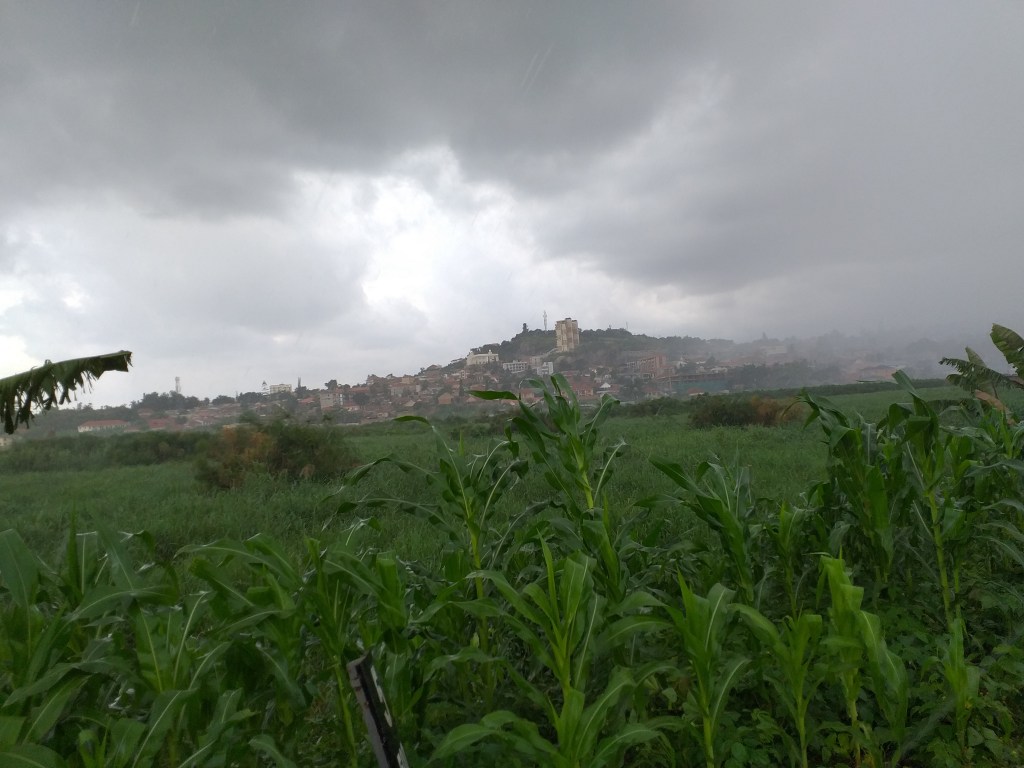
Kampala literally means, “Hill of the impala” and was originally built on 7 hills, increased urbanisation means this is now 28 – depending on exactly where you draw the city lines. When actually in Kampala these hills are very obvious, more so than in the photograph above, taken from the roof of the school when it was raining, and the same camera angle when it was not:
Walking the short distances from where I’m living to school, church, supermarkets etc. I’m constantly going up and down hills, meanwhile, it’s entirely normal to see – but not hear – motorbikes free wheeling down hills, and vehicles of all shapes and sizes struggling to get up them. Going back a few centuries, building a city on hills makes perfect sense from a defence point of view, and the proximity of Lake Victoria giving a huge supply of water made it an ideal location.
Meanwhile, it’s been raining! Having now been here for 6 months I’m still yet to work out any clear patterns as to when it rains and when it doesn’t, it seems to have been raining on and off ever since I’ve arrived. And when it does rain it is often much more intense and long lasting than is normal in the UK.
To cope with this there are a system of open storm drains:
This is by no means the fullest I’ve seen these drains when it is raining hard. I would say also that, combined with only a small amount of street lighting, these drains are one of the reasons I make it a rule not to walk on the streets during darkness hours.
So, a city on hills with a network of open storm drains which can then empty into Lake Victoria means that things should be fine, shoudn’t they? Well, up to a point this is true, but there are two further factors here. Firstly, the infrastructure takes a considerable hammering from the rain, and it’s very easy to forget just how heavy water is. So in the classroom we might teach that 1 litre of water weighs 1 kilogram which is of course true, but when we look at water I don’t think this really sinks in. According to my calculations, for example, the water contained in an Olympic sized swimming pool weighs about the same as 5 fully loaded Jumbo jets.
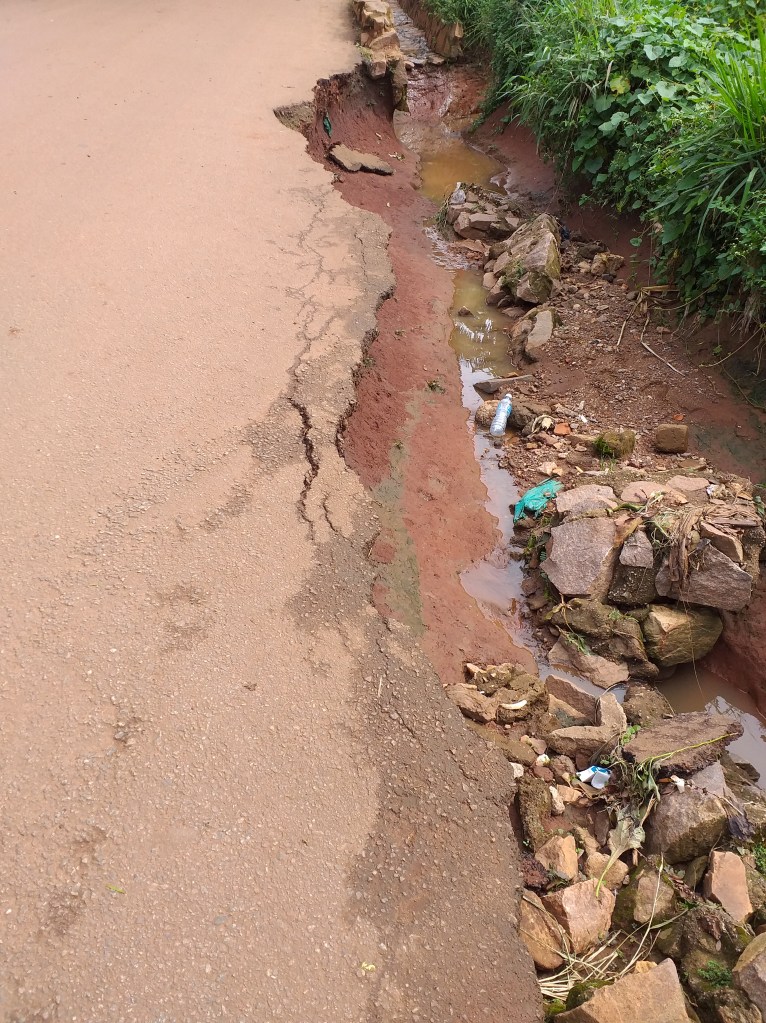
So, on my daily walk to school, there is a stretch of road whereby the open storm drain is eroding away, it is alarming to watch its progress over time:
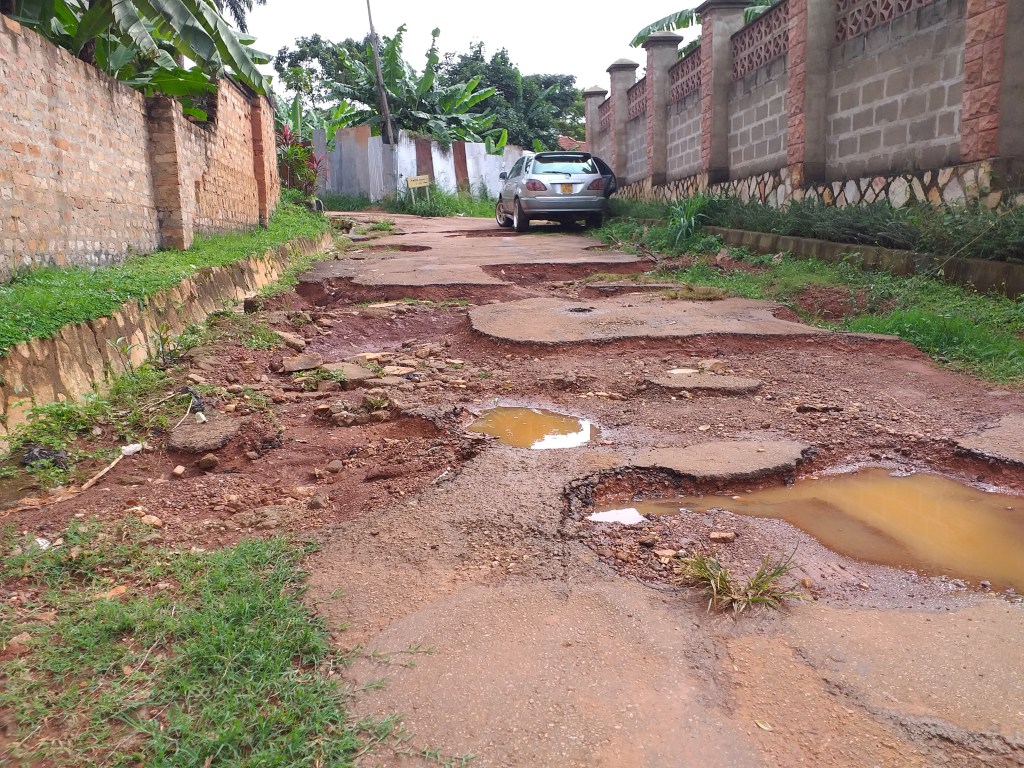
Also the roads have been deteriorating, when I look at the below I am grateful that I am not running a car, much easier to navigate this kind of surface on foot than on motor vehicle, with two wheels being more manoeuvrable than four or more:
In Dar es Salaam there was a programme of road maintenance once the rainy season came to an end, I’m hoping the same is true here – although, as I said above, I’ve yet to get a sense of rainy and dry seasons.
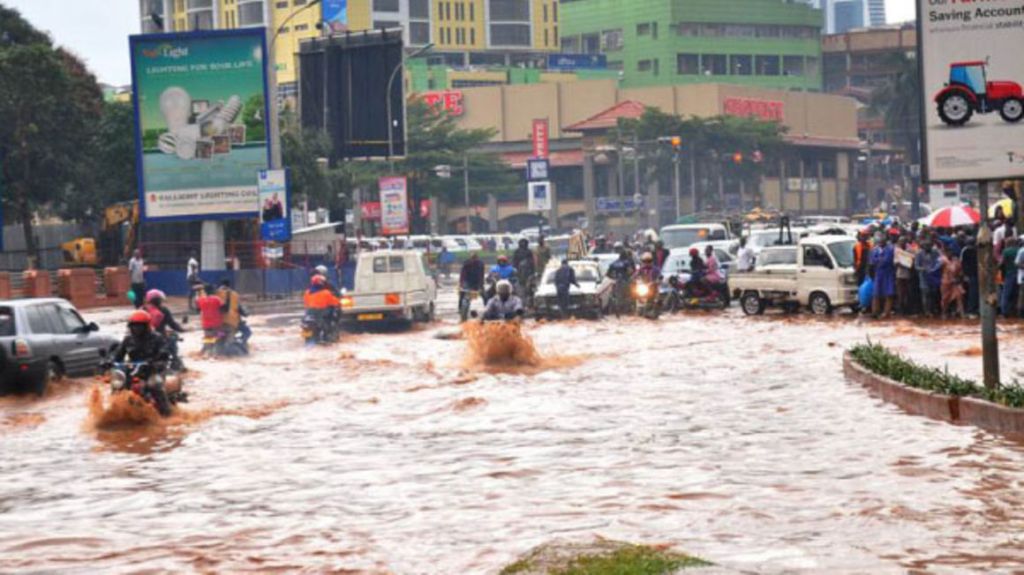
Alongside the damage to the infrastructure by the heavy rains is the fact that huge quantities of water can do massive damage, particularly, in the valleys, before finally reaching Lake Victoria. The following pictures I got from the Internet, the first near a huge supermarket which I visit occasionally:
and the next from Ggaba which is not far from here, it did worry me driving in rains in Dar es Salaam that you cannot see the surface of the road to know whether you’re driving over pot holes or into storm drains:
Every time it rains I find myself grateful that I am fortunate enough to live and work on hills. But as I watch the rainwater going down the hills in the open storm drains I’m very aware that this water does not go straight to Lake Victoria – and it won’t surprise you to hear that it’s not relatively rich people who live and work in the valleys.
Water is, of course, essential to life of all kinds, bringing great beauty and recreational possibilities. At the same time it brings enormous potential for erosion and destruction. Let’s remember in our thoughts and prayers the people most vulnerable to this destructive power, and the leaders of the country as they navigate multiple demands in building and maintaining the infrastructure needed for a safe environment for all.
Very pleased to have been worshipping at St Stephen’s Church of Uganda Church, Kisugu, since I came out of lockdown in November. St Stephen’s is walking distance from where I am living, has services in English and Luganda, follows much the same liturgy that I’m used to, with a strong focus on Biblical teaching. Fantastic! Before I joined the choir I much appreciated their ministry from the congregation, sitting two thirds of the way back it is very much a unified sound rather than individual voices, a massive aid to worship which is fantastic.
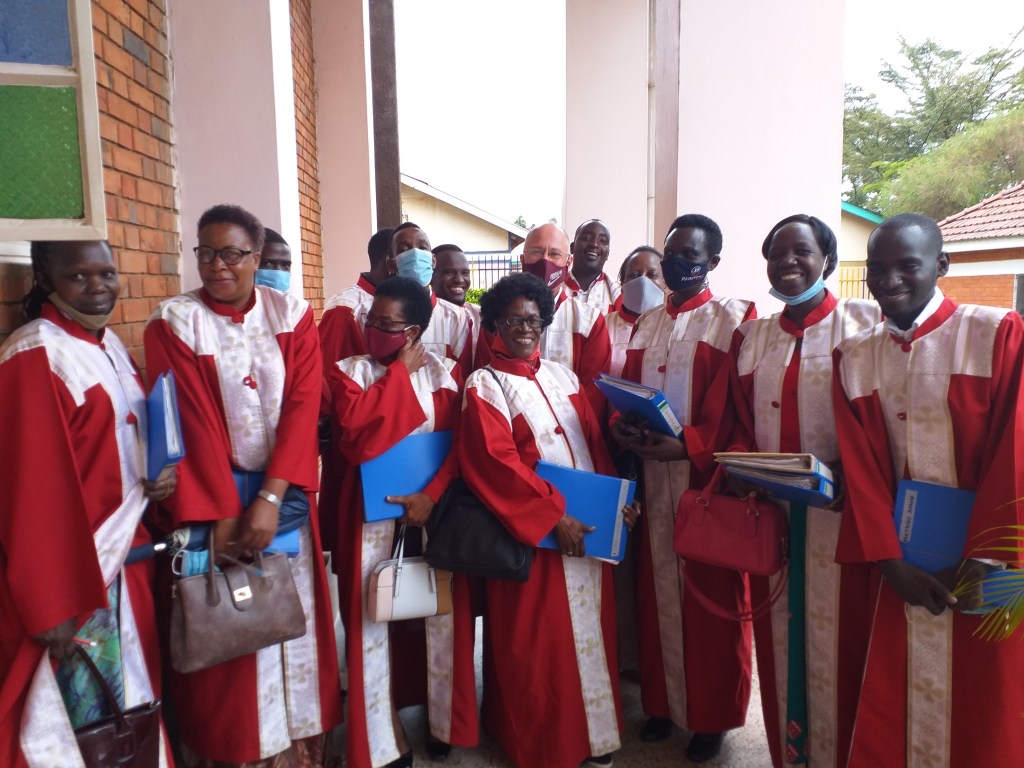
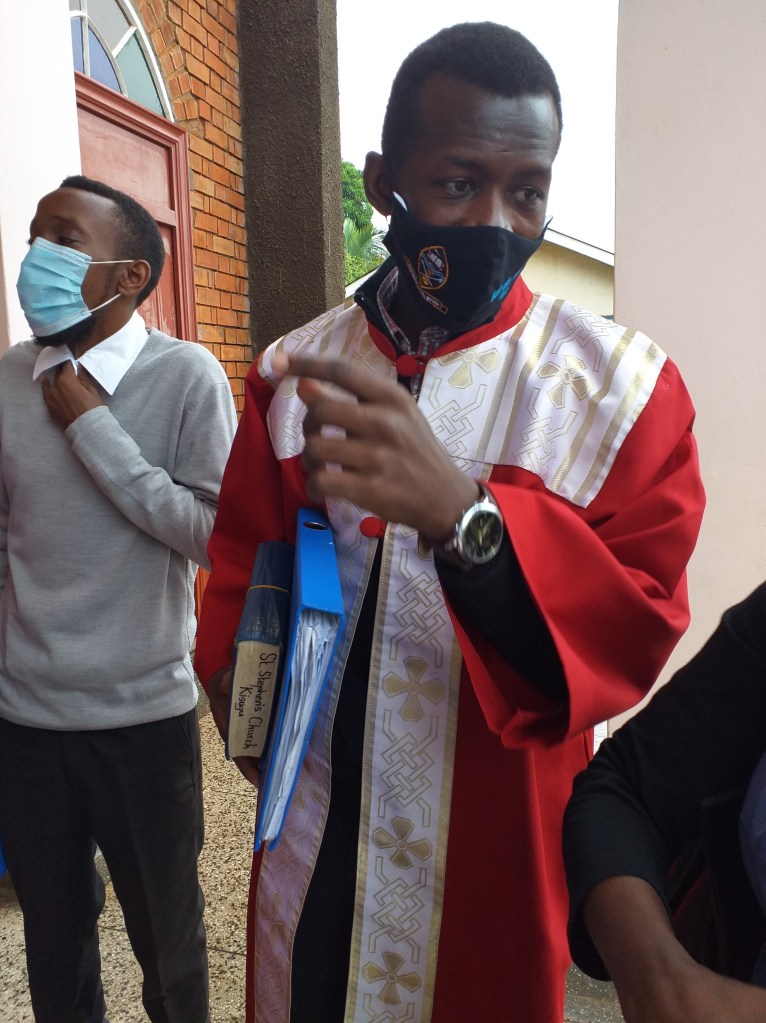
And now I’m a member! As you can see we wear smart gowns which are buttoned at the top – well, most of us do:
Here I am with fellow chorister Daniel, actually, looking at the picture I’m being more discrete than I was thinking, wearing a white shirt helps to hide the fact that I’m allowing some ventilation in, bit essential in tropical weather I think!
We’re very pleased to have a superb organist and choir master, also called Daniel:
We spend a fair bit of time in rehearsals learning the notes for hymns using tonic sol-fa. Daniel puts a considerable amount of time into transcribing hymns and the anthems we do into tonic sol-fa, the blue folders you see in the pictures above are collections of these transcriptions from ‘Hymns for Today’s Church’. The time spent learning notes for hymns in tonic sol-fa which is really good for me as it gives a chance to build up some fluency with it rather than just knowing ‘Doh – re – mi’ courtesy of the song “Doh a deer” from the film, “The Sound of Music.” Surprised to discover that there are two ways to deal with accidentals (sharps and flats if in the key of C). One is by extra notes, so for example the semi-tone between Doh and Re is either Di (ie. Doh sharpened) or Ra (Re flattened). The other is by temporarily changing which note is Doh. So, for example, the hymn ‘My song is love unknown’ is in the key of E flat, but for the line, “O who am I, That for my sake’ A flat becomes Doh and then changes back again straight after. A bit of a surprise the first time I came across this, still finding it difficult to get there fluently but I’m working on it! I would say also that Daniel is both a highly proficient keyboardist and has been using tonic sol-fa all his life, so is constantly shifting key to accommodate the singers – great to be able to do this but does take a bit of getting used to again!
I’ve been singing bass or tenor depending on who is there when the rehearsal starts, also I played a bit when Daniel was away a few weeks ago which was nice. Also I have led the choir a few times in Daniel’s absence, on one occasion getting them singing one of my favourite songs, Amy Grant’s, “Thy word is a lamp unto my feet” – see for example this YouTube video. Great to hear members singing it for several rehearsals afterwards. Alongside the music I’ve really appreciated getting know some of the other members. And Michael (remember this blog post?) kindly comes to pick me up after the Thursday evening rehearsals, whilst normally I’m happy walking to and fro I make it a rule not to walk on the street after dark.
Still very early days, really valuing the opportunity to contribute to the life of the church in this manner. If you’re in Kampala on Sunday do please come and see us, we sing at the 9am service, you’ll be sure of a great welcome! May well be coming back to the choir in this blog in due course, meanwhile, thank you for reading, I’ll be back again soon!
It was about 2 months after arriving in Dar es Salaam back in 2012 that I went to a meeting in Arusha. As we were travelling in the city, I remarked upon a group of motorcycles on the side of the road, and it was explained to me that these were ‘boda boda’ (or just boda), people paid for a ride on the back of the motorcycle. Oh, that’s interesting, says I. And they’re in Dar es Salaam as well. Oh really?
When I returned to Dar es Salaam I immediately started seeing boda, which raises the question as to how I could have been there for 2 months already and not noticed them. There are answers here, of course: at the time I just had not imagined the possibility that motorcycles could be taxis, so if I saw one I just assumed that it was the owner plus a friend. I like to think that, had I started my time in East Africa here in Kampala, even somebody as obtuse as me could not fail to miss what was going on:
But of course, what starts off as strange quickly becomes normal, when I was in Uganda in August 2019, staying in Luwero Town and visiting Kampala Christian Orphanage in Wobulenzi most days, by road about 1/2 hour:
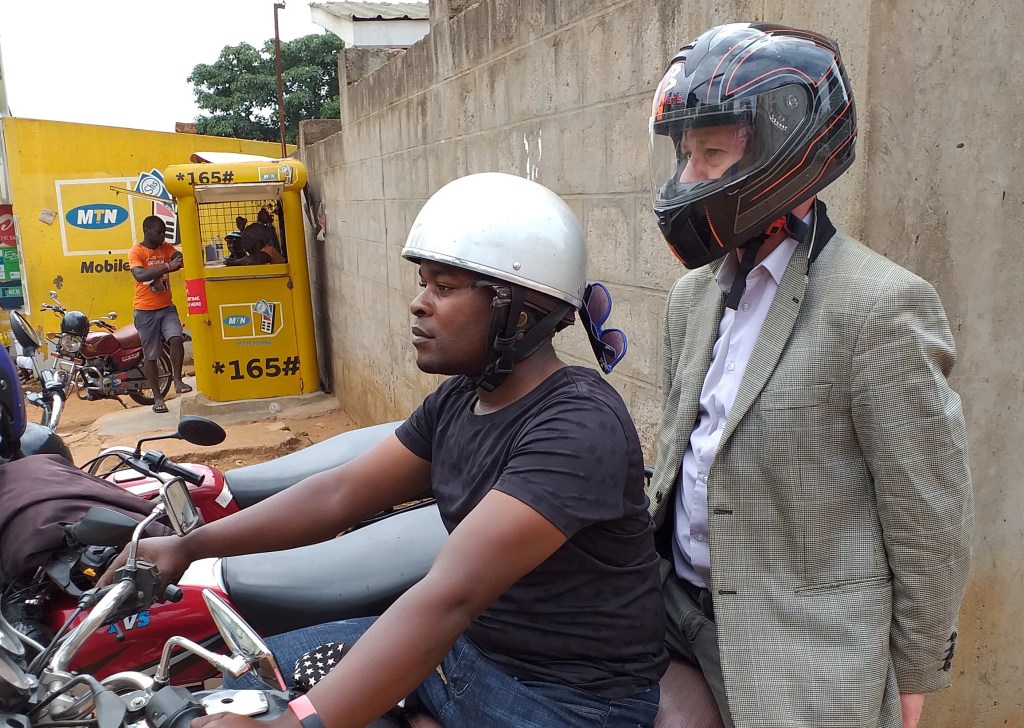
I took it for granted that the way to travel was by boda. Now that I’m living in Kampala, not running a car, able during the normal working week to get where I need to go – school, church, supermarkets, etc. – by foot, I again took it for granted that when I needed to go further afield I would use a boda. So, back in November, the first question when I came out of self-isolation was, how do I find a boda driver. Denis, our askari (security guard), who features in my first blog post and has been helping me with my YouTube channel, “A minute a day to pray” put me in touch with Michael, in the photograph with me at the top of this post, and it’s mostly been Michael I’ve been calling on ever since. Thank you, Denis, for the introduction and thank you, Michael, for all your help since then!
Two things before I continue. Firstly, where the term ‘boda’ comes from. ‘Boda’ is short for ‘boda boda’ which in turn is short for ‘border to border’. Uganda, of course, is landlocked:
It used to be the case that when one crossed a national border by road there was a distance of about 200 metres between the two country border posts, over which passengers in coaches would need to get off and unload all their luggage. So a variety of vehicles, including motorcycles, would be offered for hire to get people that distance of 200 metres from border to border. So the term ‘boda boda’ which has been generalised to mean a taxi on a motorcycle.
The other thing to say is that, for the purposes of this blog post, I made a video from the back of Michael’s motorbike yesterday, so the video clips are from that ride. So, here we go, wish us luck!
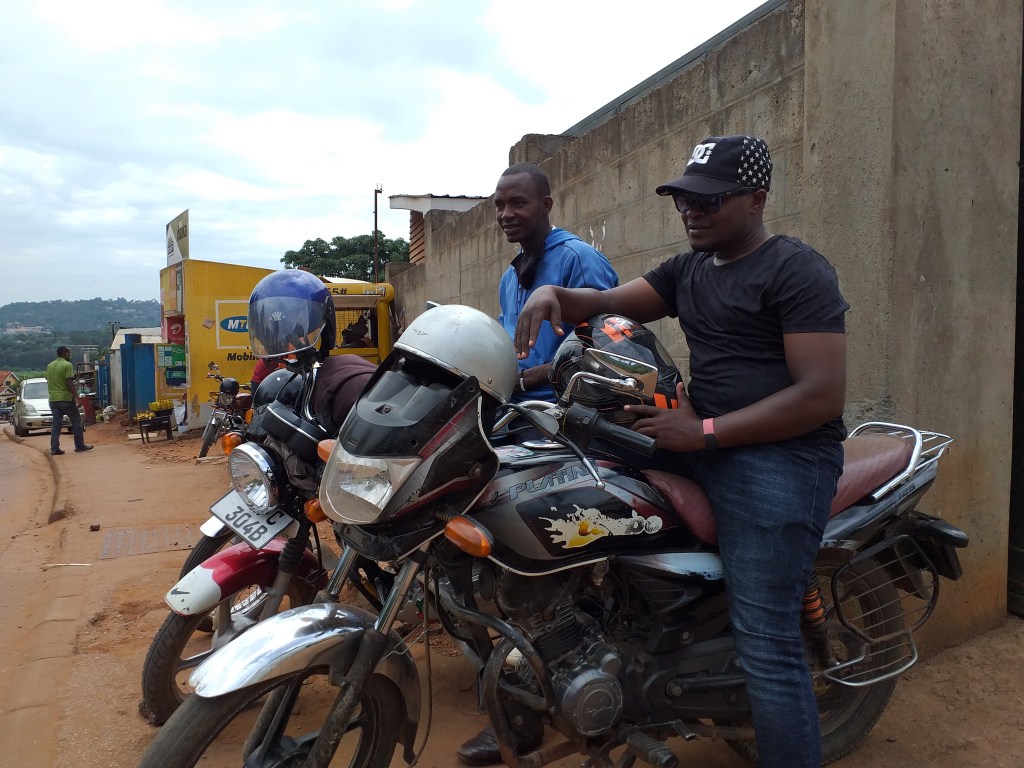
The ride starts from Michael’s stage:
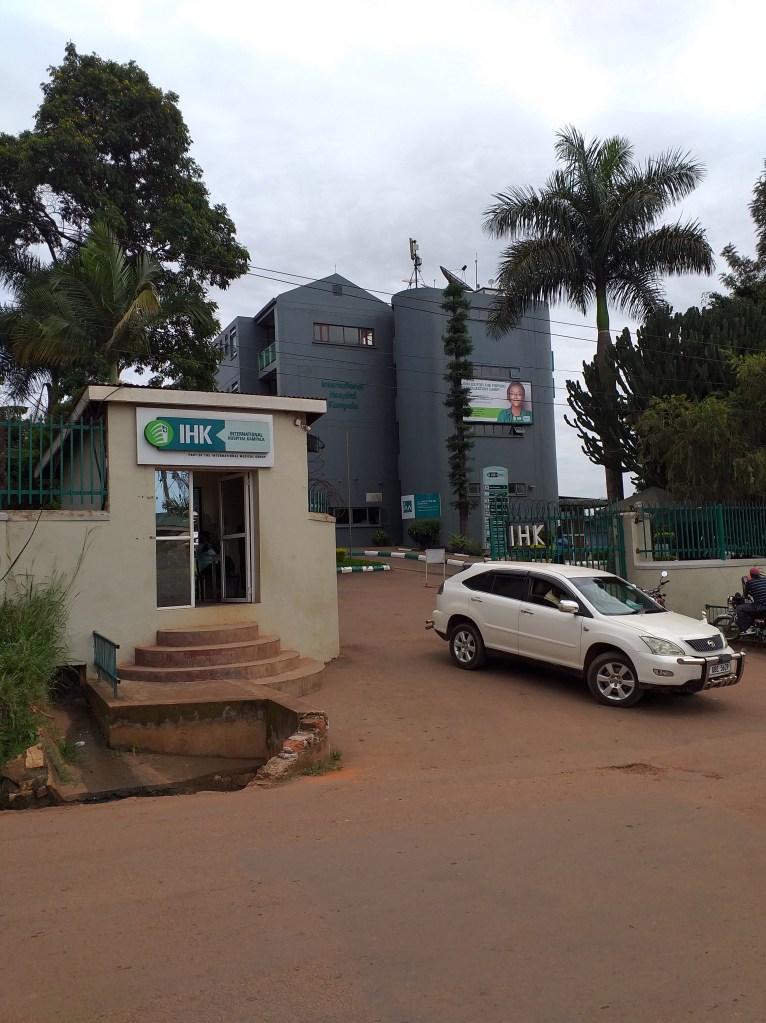
which is opposite the International Hospital, Kampala, about 5 minutes walk from where I’m living:
The stage has a total of about 20 riders with remarkably low turnover, there have only been 5 changes to the membership over the last 10 years. New members need to go before a committee and buy their place, which they can then sell when the time comes. So, from a customer point of view, best way to get a boda is to have an established relationship with a small number (in my case, 1) riders whom you trust. Next best is to go to a stage, the reputation of stages is very important to the riders, they won’t stand for any nonsense!
There are a number of reasons for preferring boda to other forms of transport. It has been raining a lot recently, and the state of the roads has been deteriorating, easier to navigate pot holes on two wheels rather than 4:
Don’t need to get stuck in traffic jams:
You don’t need to worry too much about traffic lights:
or one way systems:
I would say also that, whilst I have seen the police stopping cars and larger vehicles many times:
I can’t remember ever seeing the police stopping a boda. All in all, a jolly good way to travel, I hope you’ll agree! If you’re feeling brave, the below is the entirety of the video that I made, about 7 mins 30 secs, stops abruptly when my phone just stopped recording. Hope you like the added music. Enjoy!
So, that’s the ride, what about the rider? Michael was born in a village called Bugangari, Rukungiri District in the South West of Uganda, not far from the border with the Democratic Republic of Congo:
He got as far as O levels at the age of 16, whilst he wanted to continue in education he had to leave because of lack of money. He then moved to Kampala to find employment, and initially worked in canteens, then selling scratch cards for mobile phones (now superseded by electronic methods of paying) and renting out a phone for people who wanted to make a call but didn’t have their own phone.
Through friends he got into boda riding in 2009. After a while he switched to taxi driving (‘private hire’) but for a number of reasons that did not work out so he returned to boda riding. Given the choice he would want to do something else, ideally back in Bugangari which is where his family is, one possibility he is interested in is working as a wholesale grocer. Apart from anything else, there are health risks attached to being a boda rider, you might also spare a thought for street vendors who spend their lives working in heavy traffic:
Of course, setting up a wholesale business will take some capital, one option is to find a job in the United Arab Emirates, maybe as a security guard or cleaner, for two years which enables Ugandan people to save money whilst spending most of their time working.
You’ll appreciate that a good bit of the information in this blog, both about boda riding generally and also about Michael himself, has come from Michael, I really appreciate his time in talking to me about these things. In the first video clip above I showed you a huge number of boda all together. Talking to Michael is a good reminder that each and every one of those riders is an individual, loved by God, with a story to tell, with family, needs, wants and ambitions. Having got to know Michael a little over the last few months I’m confident that he can make a success of his ambitions and wish him well for the future. For the time being, though, very pleased to employ his services as my boda rider. Thank you, Michael, really appreciate it!
Absolutely delighted to be able to visit Kampala Christian Orphanage yesterday. Having had part 1 of the Astra Zeneca COVID 19 vaccine last week, Mr Katende Emmanuel, the village chairman, kindly gave his permission for my visit. So, a ride on the back of a motorbike (thank you, Michael!) to reach the starting point for the ‘taxi’ (ie. 14 seater inter-city bus), then to Wobulenzi to be met by Alex, whole journey about 2 hours.
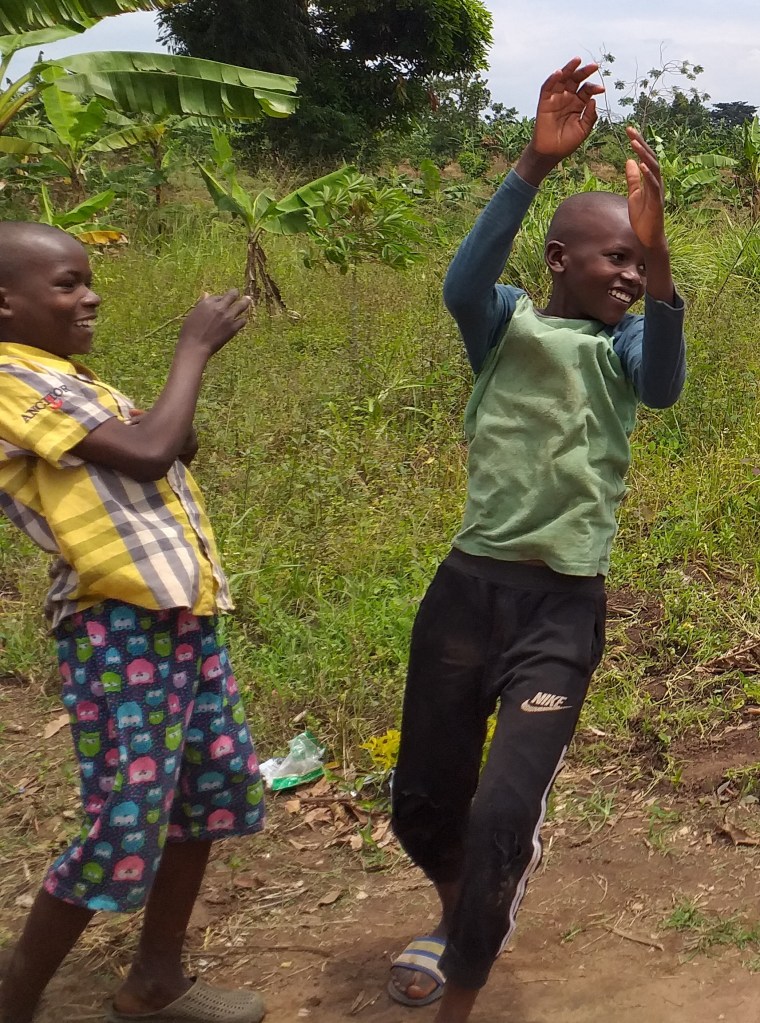
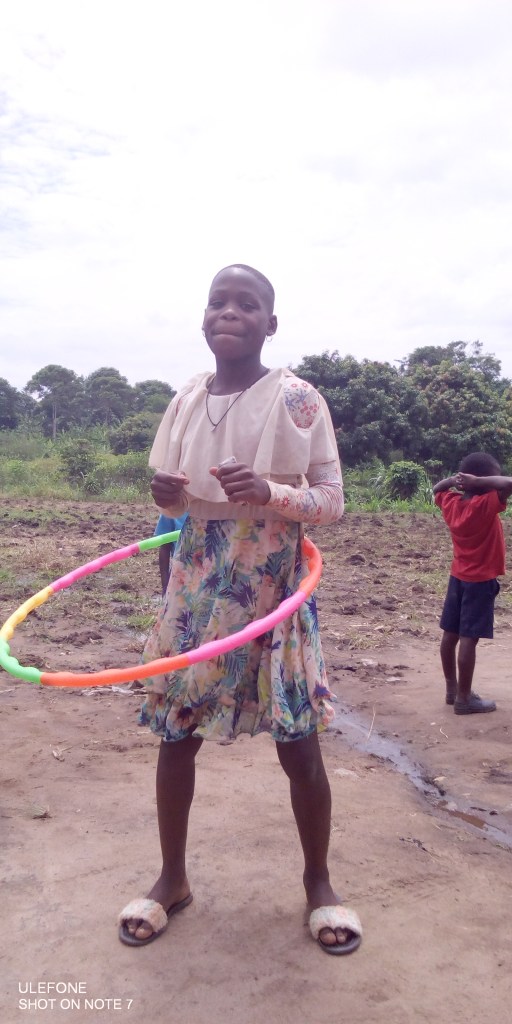
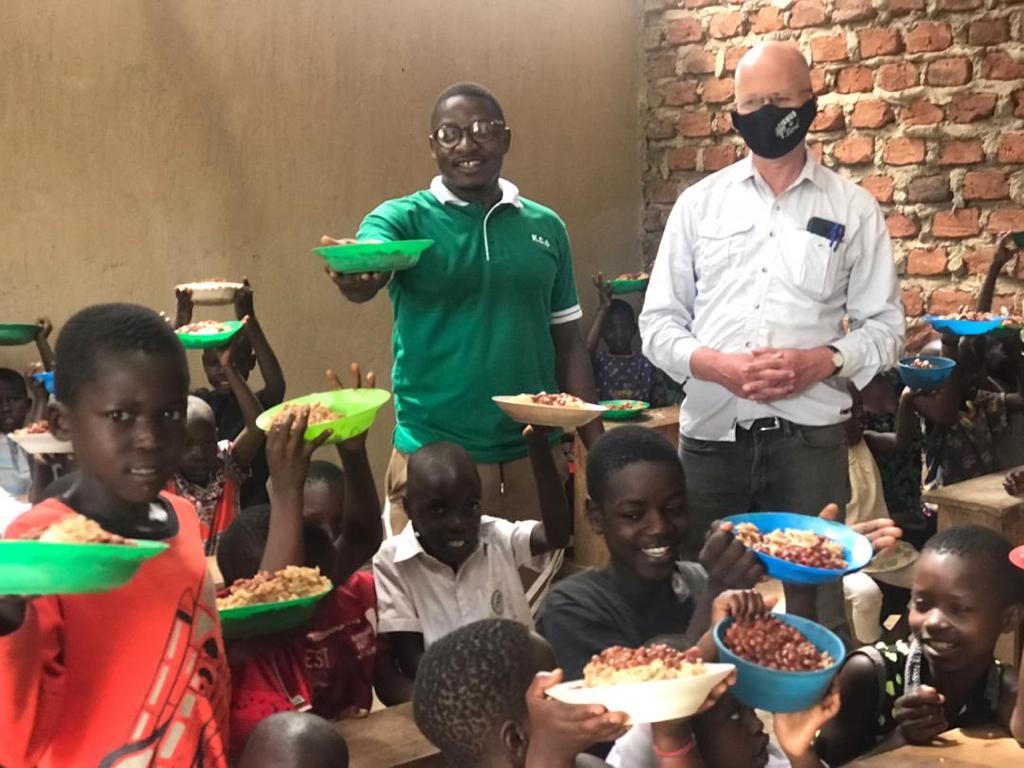
So fantastic to see the children again for the first time since August 2019, here are a few of the pictures:
Of course, need to lead some children’s songs with actions, keen students of the same will recognise, “Who’s the King of the jungle?”:
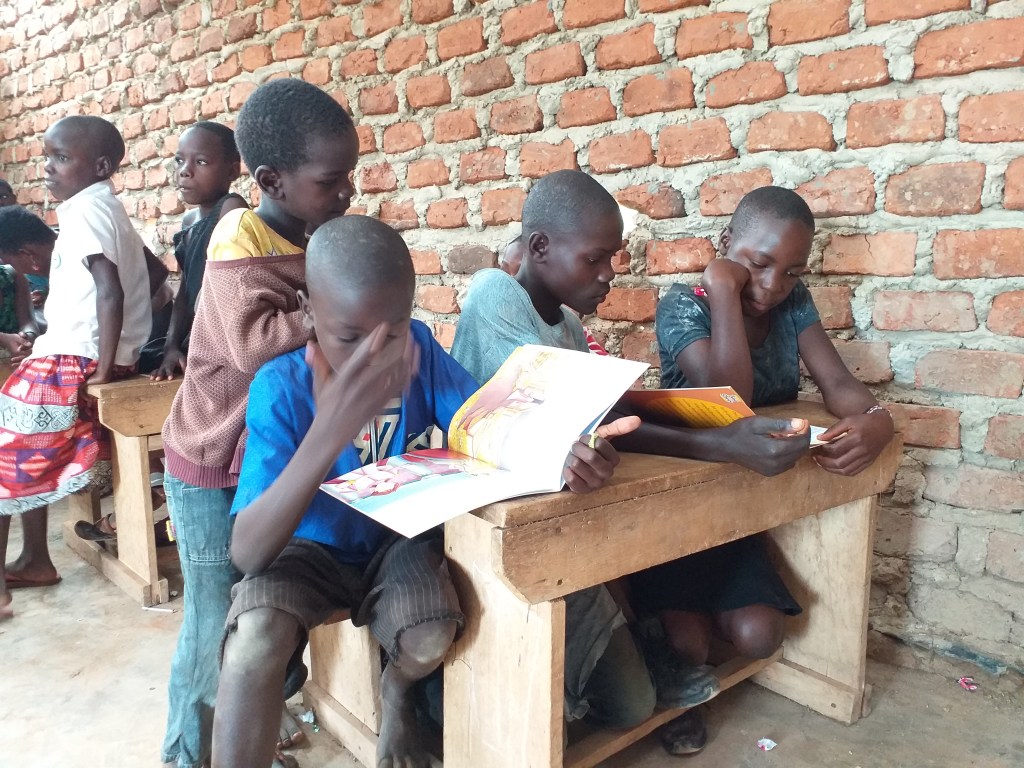
One of the big sadnesses of my visit was the lack of school. Since lockdown has started a year ago, Ugandan schools have not been operating normally, which some exceptions now for international schools and for examination classes. It can readily be seen that, for day schools and boarding schools where children have families to return to, this helps reduce the spread of the virus. However, at KCO the school and orphanage are integrated, with some local children also coming to the school. As far as I can see, closing KCO’s school makes no difference to social distancing but comes, as for all children, at a huge educational cost. Meanwhile, great to see children enjoying the books I brought with me:
Let’s pray that schools will be allowed to operate normally again soon.
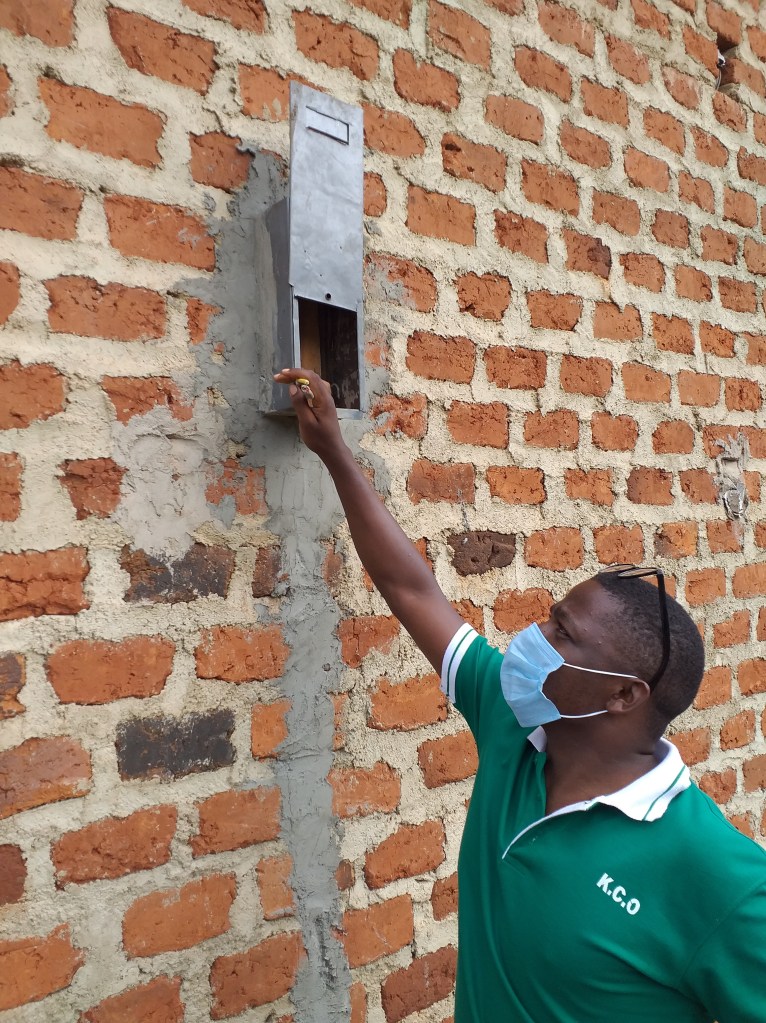
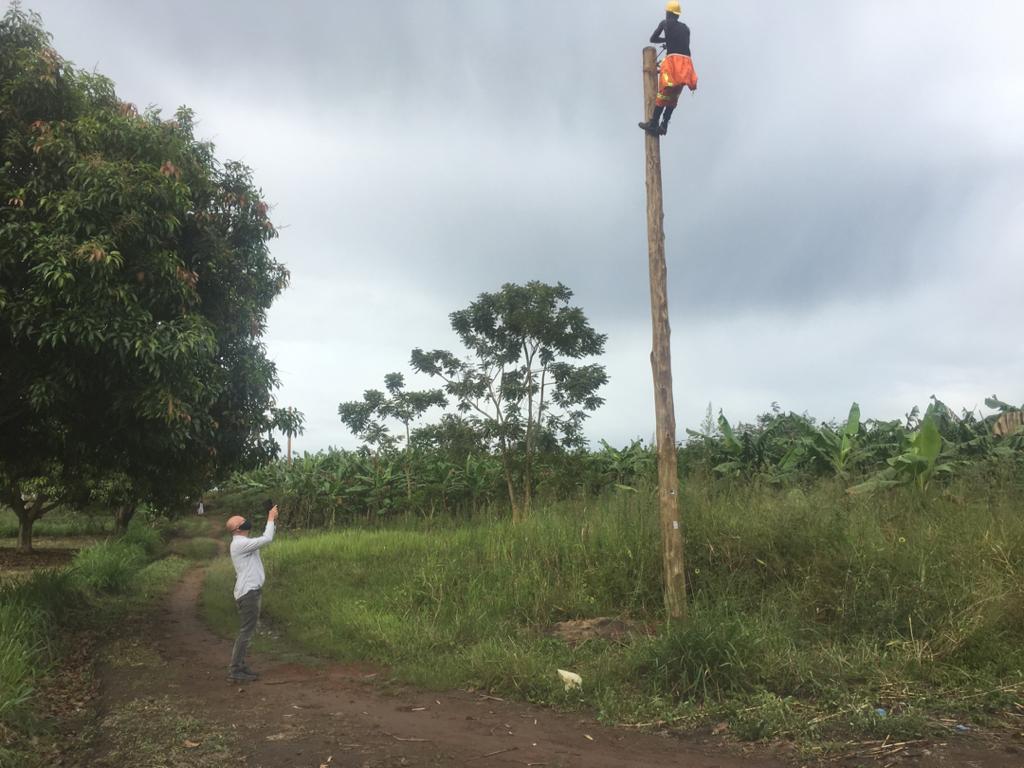
As well as talking with the children it was great to be able to see some of the building work going on recently. Many thanks for all the contributions to installing electricity into the orphanage, the connection box is all ready:
With earthing, switches and light sockets installed. The last remaining stage is connecting up with the central supply, work was going on to facilitate this yesterday:
So watch this space! Connection due to be made in the next few days, really excited to see this happening, thanks once again for all the kind donations to make this possible!
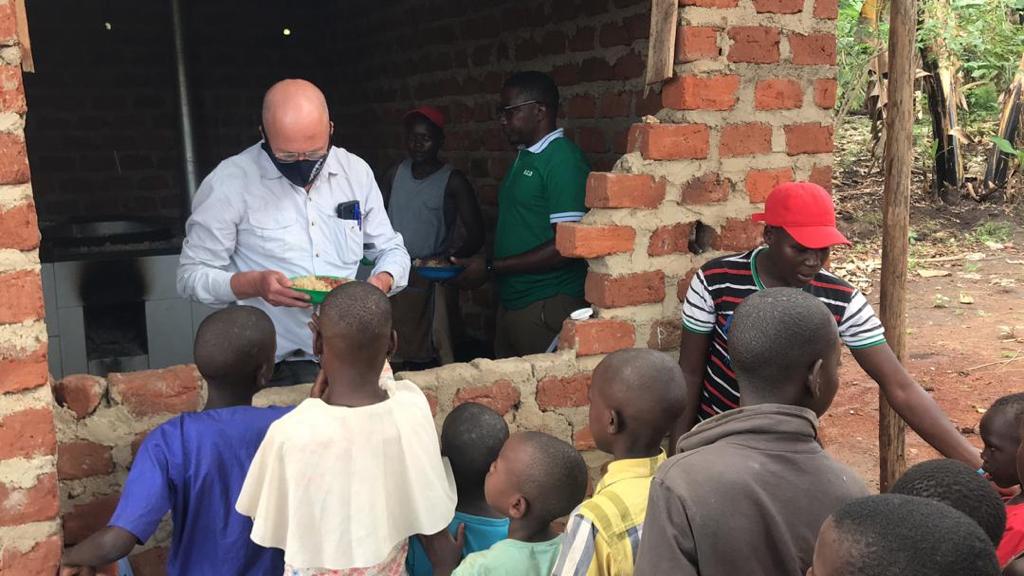
Another project over the last few months has been the building of the kitchen. Very pleased to say that the kitchen is now operational with perhaps the scariest oven I’ve ever seen:
So this is a wood burning stove with two huge cauldrons, typically used for either rice or ‘posho’ and then beans. This is much appreciated by the children:
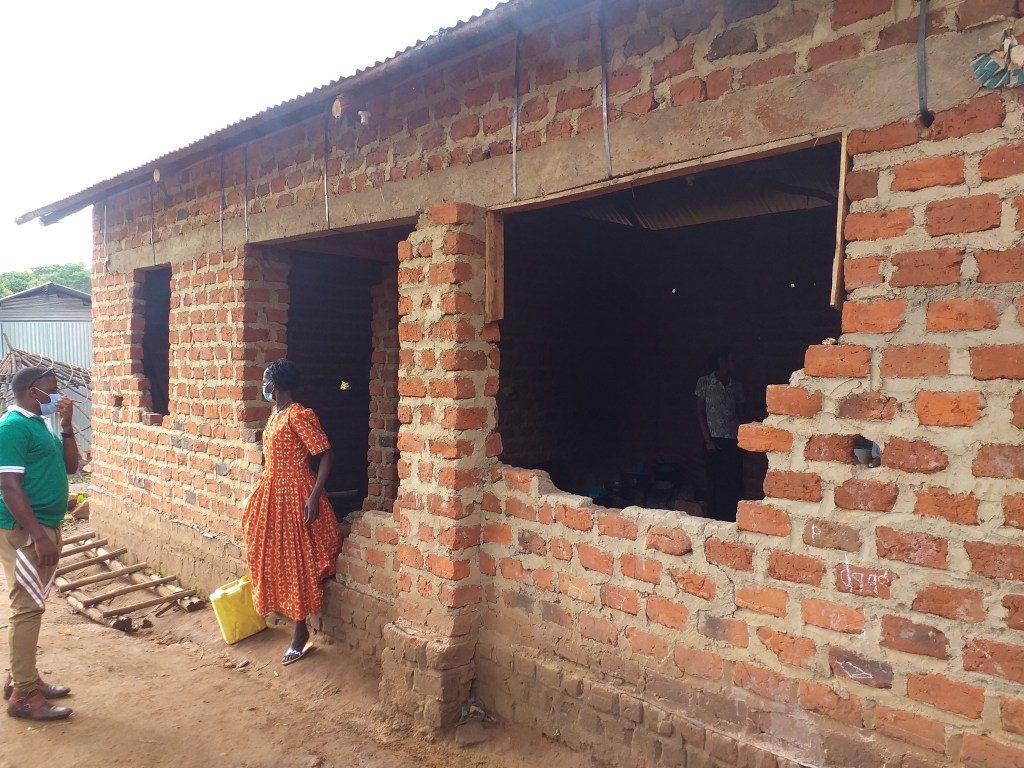
Whilst the building is operational it is not yet complete:
As Alex and I set out in the video below, would really value your help in the closing stages of this important project:
So that was my day yesterday! Really glad to make contact again, thank you to Alex, the staff and the children for having me, looking forward to visiting again soon. Thank you!
Really delighted to be asked to run some professional development classes for my colleagues, Monday after school. Only one so far but thought I’d let you know how it’s going!
Of course, running professional development for teachers is not new to me, I spent 12 years in initial teacher training (ITT) in the UK and then 4.5 years on a masters in education programme in Tanzania, with lots of work at varying levels with serving teachers during that time. What is new is working in-house, the teachers I’m working with are my immediate colleagues whilst my main job is working with youngsters.
Which is brilliant. When I started working in ITT I was thinking maximum of 10 years, in fact I did 12 and came to the conclusion that I’d been right in the first place. There’s a bit of a catch-22 working in ITT., it seems to me Whilst one needs experience to do the job well, the more experience one gains, the further distant one’s own teaching experience becomes. At various stages I considered the possibility of doing some part-time work in school alongside working in a University, but the idea floundered on practicalities, the need to be in school at fixed times 4 or so times a week would have been very disruptive – and constraining – to the University work. As things are, the professional development work slots neatly into my normal working week – and I’m around to have follow up discussions which is already well under way.
Alongside this, you will understand that this is a rather scary undertaking. I’m running classes on teaching for immediate colleagues, whilst working predominantly as a school teacher. Because of the adaptations we’ve made to be compliant with Ugandan government COVID regulations, we teach in open spaces so are more aware of each other’s work than we would normally be. So I was fully expecting a sharp intake of breath when I said, “Rule of thumb, keep a class discussion together maximum for as many minutes as youngsters are old in years,” – so, if you’re teaching 11 year olds, keep whole class discussions to a maximum of 11 minutes – as my colleagues were collectively thinking, “How dare he? We hear him droning on for hours and hours to his classes, and now he presumes to tell us THIS?”
In fact the sharp intake of breath did not come. This is partly because my colleagues are far more polite than I am. It is also because I had anticipated this point, and made it very clear that, in running these classes, I am not holding myself up as a perfect, or even necessarily a good teacher, but as somebody who has had the privilege to stand back from teaching and reflect on the issues with some ideas to share. And I make a point of indicating aspects which I find particularly hard, for example, when youngsters misbehave or are rude in your classes, this is the nature of being young, deal with it as a representative of the teaching professional and not as a private individual. That is to say, don’t take thinks personally! This is a very strong case of, “Do as I say, not do as I do.”
So I’ve decided that the key phrase whilst doing this work is, “I’m not wrong, I’m being hypocritical.” I myself drone on to classes for hours? I’m not wrong about the one minute per year rule, I’m getting caught up with the maths with inadequate preparation. “Don’t take things personally,” and you see me getting angry with a class or individual? I’m not wrong, I’m falling short of the high standards our profession demands.
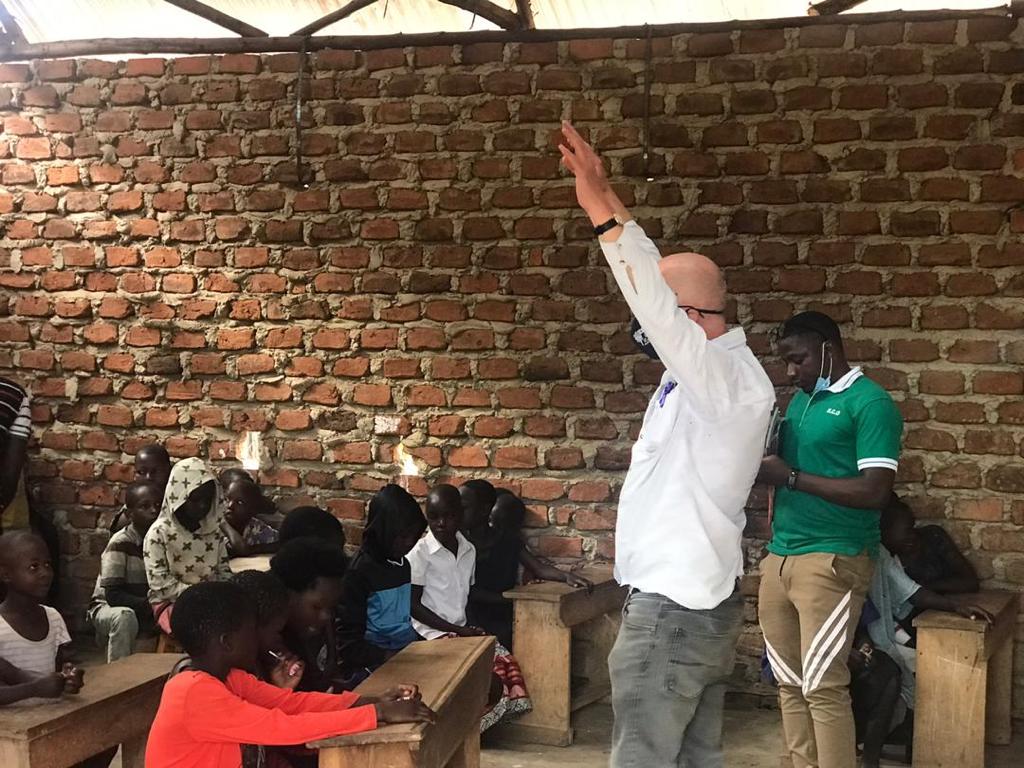
Last week was looking at classroom management before anything goes wrong, setting up good routines and consistent standards. Curiously, what makes this hard is the fact that Acacia has by far the best behaved, most polite, most highly motivated group of students I’ve yet met collectively, getting a sense of doing things because of problems which haven’t yet arisen is hard, particularly for colleagues whose only experience is within the school. Tomorrow’s class is dealing with low level disruption before one calls for outside help. I’ve adapted an idea we used in ITT which is to agree with my colleagues that, from a management point of view, I’m going to be treating them like 12 years olds, with a number of them prepped to misbehave in various ways. I’ll let you know how it goes!
Initial feedback has been great, with one colleague using a resource – Tarsia – which I had ready before we started, another saying she tried out the minute per year rule with her 11 year old class, initial reaction is that it works! And I think colleagues have taken on board the point that I’m not setting myself up as anything more than a pretty ordinary teacher who has thought about some of the issues involved here. Remember, I’m not wrong, I’m being hypocritcal!
I returned to full time secondary school teaching in September 2017 after a 22 year absence. Now, I had done all manner of things relating to schools during that time, including part-time teaching, school visits, also some Sunday School teaching. But having got as far as I felt that I could working in Universities – the next big step would have necessitated a large amount of work on research which I neither consider to be a primary area of strength nor a passion – I felt that I wanted to return to school teaching, to actually do what I’d been talking about for so many years.
I was fortunate to get a post in a school I knew well from the outside, and particularly my immediate boss, the head of the mathematics department, was a colleague from some years before which was really helpful. I knew that the return to the classroom was going to be tough, but I don’t think I was fully prepared for just how tough it was going to be. The nature of working in mathematics education as a University lecturer is that I had a small number of whizzy ideas to exemplify particular points, whereas what school teachers need are a large number of workaday ideas for the daily reality of teaching with a massively greater amount of contact time. I remember getting to the end of the first day and joking, “So we have to come back and do this again tomorrow?” – except that it wasn’t entirely a joke. Daily routines were a struggle, and I ended up waking up at 2am only to doze thereafter, with a grinding sense of failure that I was doing far worse for my students than I knew was theoretically possible. Somewhat after 1/2 way through the first year I ended up taking time off for stress when the whole thing became too much. However, I carried on, really grateful to then colleagues and students for all their support, and really, really grateful for the opportunity given to return to the classroom.
In the middle of all this was what was called “The settler” which was the beginning of each lesson. A list of numbers was prepared to last for 1/2 term, and then each day there would be a rule, such as, “Multiply by 99”, “Divide by 4 and round up”, “Times by 3 and add 23” and many, many more. So, as students arrived for the lesson, they would see what the rule for today was and know what to do. Initially I was very resistant to doing this with my students and I think there were a number of reasons for this, including feeling overwhelmed and this was yet another thing to do. Also it took a while to understand that the purpose was not to come to any great realisation about the nature of the numbers, it was, as its name implies, to settle, to signify, we’re now in the mathematics lesson, time to get our mathematics brains ready. The settler also goes some way to address a criticism often made of secondary mathematics, which is that youngsters come from primary schools with good calculation skills which then waste away in the secondary years through lack of use. From a practical point of view, it also gives me as the teacher a couple of minutes to get things organised ready for the beginning of the lesson whilst the students are purposefully organised.
When I did, belatedly, start using the settler I became a convert to the cause with all the zeal which comes with it. The settler is great! And so when I came to change schools, to work here in Uganda, I was determined to bring the settler with me. And I have. With my two older classes I sometimes make some comment about methods eg. for multiplying by 99, links between multiplying by 1.1 and percentages, different reasons for doing division sums and how the way of dealing with any remainder changes accordingly, but generally I use it according to the original intention, some practice of basic numerical routines before going on to the main part of the lesson. It’s with my youngest class, Grade 7 or Year 8, where the settler really comes into its own. It’s a small group, only 5 students, which is a huge luxury, able to give additional support in a subject they find difficult. They just love the settler! If it’s a division one of them will ask if he can write the relevant timestables on the white board. Lots of discussion about calculation methods. Also, something which the students came up with, they ask if they can ‘reserve’ a number, ie. if they’re working on one particular calculation please can nobody else give the answer to it in the meantime. They also like Tarsia activities – ie. triangular jigsaw puzzles with matching statements on adjoining sides, see for example this website – so I need to be careful that, with a settler which is taking on a life of its own, and then the need to leave a reasonable amount of time to do the Tarsia puzzle, there is enough time between them for a reasonable main part of the lesson.
So my thanks to colleagues at my previous school for persevering with me, I really appreciate it, and am pleased that the concept of the settler is now fully international – even if that means it is used in two schools. One question on my mind is whether – and how – the concept of the settler can be adapted to other subject areas. I know that English lessons sometimes start with maybe 10 minutes of silent reading which is broadly similar. What about other subjects? Working on this, do let me know if you have any thoughts.
In August 2019 I was privileged to be able to spend 3 weeks visiting the Kampala Christian Orphanage (KCO) in August 2019, which looks after approximately 60 girls and boys aged between 4 and 10. Over the last few years I have supported their work in a number of ways, including in appealing for funds for them. It would be fair to say that it is my connection with KCO which was part of my motivation in wanting to live and work in Uganda which is what I am now doing. Since I have been living in Uganda I have visited another orphanage in Kampala which looks after 18 children, both orphanages operate without state support and are largely dependent on foreign donations.
Meanwhile, at work and in other places I meet people concerned with child welfare who are working hard to dismantle orphanages across the world. A quick Internet search uncovers ‘Hopes and homes for children’ which is an organisation which takes the view that orphanages need to be ‘eradicated’: “we are working towards a day where orphanages have been eliminated for good”.
So, I’ve been grappling with the issue of orphanages for some weeks now, trying to avoid the temptation to defend them simply because I have invested a certain amount of time and effort already in supporting them. Please see my thoughts below, as always, very interested in what you think!
Points of commonality
For the moment, whilst, I realise that most dictionaries won’t agree with me, I’ll define an orphan as a child unable, for whatever reason, to live with at least one natural parent. The existence of orphans by this definition is already, I think we can all agree, less than ideal. We can further agree, I think that where orphans do exist, the best place for them, if possible, is with wider family members – grandparents, aunts, cousins, older siblings, etc. If this is not possible, then some other stable family setting would be good. If this is also not possible, then, at this final stage, orphanages step into the breach.
There is, however, no doubt that orphanages in some circles have bad reputations, and there are various scandals surrounding them, including:
Where orphanages do not exist at all, and scammers simulate their existence, eg. by gathering local children to pose for photographs in order fraudulently to obtain funds intended to help children;
Orphanages being the front for child trafficking, whether this be for illegal adoption, forced labour, under age prostitution or other purposes;
Orphanages do exist but children are kept in appalling conditions whilst money is syphoned off by those supposedly looking after children;
Parents are actively encouraged to send children to live in ‘orphanages’ in the belief that they will then have a better life than they can living at home (as opposed to the initiator being the parent or wider family members).
But even when orphanages are being run for the benefit of the children living in them by people who give of themselves tirelessly and selflessly to do the best for the children in their charge, there are the problems of institutionalisation, lack of opportunity to form relationships with adults which other children would take entirely for granted.
All of the above is, I think, common ground for everybody working for the benefit of children in difficult circumstances. Any disagreements are around practicalities. Let me set out my own position below.
Moving forward
Let me respond firstly to the explicit abuses surrounding orphanages listed above. These are, of course, appalling, and it is the responsibility of everyone involved – Governments, NGOs, schools, social services, etc. – to do what they can to stop these things going on.
But I am really unhappy that all orphanages are lumped together in discussions about them, those which facilitate child prostitution with those doing everything to provide the best homes possible for children in extremely difficult circumstances. It surely makes no sense to conclude that all orphanages should be eradicated because of these abuses.
But there does remain the point about family settings being better places to bring children up than orphanages. The issue then becomes one of practicalities. Is there sufficient capacity in family settings for all children who need it? It is not at all obvious to me that the answer to this question is yes. I am wary of projects – which, by definition, are time limited – which do enormous good in the short term in implementing models which did not arise locally, but then funding is withdrawn on the assumption that what has been put in place is sustainable in the long term. All of this is highly problematic, it seems to me, when meanwhile, here in Uganda, there are orphanages for Ugandan children set up by Ugandan people with a passion for the children they serve.
So, I would encourage NGOs and others working in this area, firstly to distinguish between the orphanages which are set up for abusive reasons, and those genuinely looking to serve children’s best interests. I would further encourage them, when dealing with the latter, to ask themselves whether language such as, “We are working towards a day where orphanages have been eliminated for good,” is really helpful, or whether it is likely to antagonise, and harden the positions, of people working really hard to make a positive difference in their communities.
There is part of me which would love to set up a charity looking to provide financial support to orphanages run for the best interests of children, whilst over time in a respectful manner, looking to work with the directors in ensuring that, where possible, children are not admitted in the first place if there’s a viable alternative, if they are admitted they keep in touch with family members if at all possible, looking for ways of re-integrating them into some kind of family setting, at all times being clear that it is the people running the orphanage who are in charge and deciding what to do.
But I can’t do this by myself, for the moment it remains a pipedream as I remain in touch with Kampala Christian Orphanage, hopefully to visit soon – I can do it as a day trip from where I live but COVID 19 restrictions have prevented the visit so far – help them to raise money, and provide the best possible care in the meantime. If you think this may be a viable way forward and wish to join me, please let me know! Thank you for reading, I’d be really interested to know what you have to say.
For whoever has will be given more, and they will have an abundance. Whoever does not have, even what they have will be taken from them.
Matthew 25:29
I was quite surprised some years ago now to discover that these words of Jesus get quoted in academic circles discussing special educational needs under the title of the ‘Matthew principle’. Applied to recent lockdown learning, I suggest, they make perfect sense. Consider firstly youngsters with their own desk space, their own laptop with a consistent wifi connection, parents who understand the processes of education and are able – and have the time – to give both emotional and academic support. I remember about 2 months into lockdown in the UK talking remotely to one of my then students who broadly came into this category, who was saying that he was working harder and learning more in lockdown than he did at school. Consider now youngsters from equally loving and supportive homes but without their own laptop or other wifi device, with an intermittent wifi connection, in a home without sufficient desk space for all siblings to be comfortably working at the same time, parents who want to support but do not have the time or overview of the school curriculum to be able to do so. It can easily be seen that there are far more challenges in accessing learning than there would be with school as normal. Now, if you will, go back to the beginning and see if you agree with me – the Matthew principle makes perfect sense applied to lockdown learning. If you’re already in a privileged position you become more privileged, if you’re already struggling to keep up then things are only going to get worse.
Before I go any further I do need to emphasise that here in Uganda I’m teaching at a small Christian independent school and so have no direct experience of lockdown here in the state funded sector. Where things are very difficult indeed, from the beginning of the pandemic the Government has taken a very hard line with lockdown across the board, it is still the case that only a small number of year groups have returned to school, incomes are in the main very low, the demographic is predominantly young, families are large, Internet connections are metered, smart phones are shared in the family…. It’s going to be decades before the impact of lockdown is fully unravelled.
But let me tell you about my own experience, starting in the UK. We used as our platform Microsoft Teams which, given that it is not specifically designed for educational settings, worked amazingly well. Not perfect, as we discovered in the final virtual assembly of the year, when it became apparent that absolutely anybody was able to mute the headteacher. It only takes one miscreant! In the expectation, which seemed reasonable at the beginning of lockdown, that we were looking at weeks rather than months (years?) the mathematics department opted not to teach new material, a policy which was fraying at the seams by the time we finished. We did not attempt to live teach or, in the main, communicate by voice, as a teacher it became quite frustrating when wanting to help during lesson time but being much more reliant on students to come forward than if we were in the same room together. It was noticeable, in accordance with the Matthew principle, that it was students already doing well who were the ones who came forward and asked questions.
In August last year I started teaching at Acacia remotely from my little house in the UK. Which all felt slightly odd, very early mornings to accommodate the time difference for one thing! At Acacia we use Google Classroom, and it was immediately obvious transferring from Teams that this was software which was designed specifically for educational purposes, and a much clearer – and more robust – distinction between teacher and student (the language in Teams is owner and member). School policy was to have brief class ‘Meets’ at the beginning of lessons but not to try to ‘live teach’ which makes a huge amount of sense in the context of intermittent wifi connections, trying to teach a class remotely becomes a major head ache. In considering available options, I fell into a pattern of making videos speaking over PowerPoint presentations with the invitation to pause the video at various stages to do various exercises set. It didn’t feel a very exciting way of engaging students, and so I was very pleasantly surprised to discover that, when students were invited to feedback on their online experiences, my approach was favourably commented on by quite a number of students, as a result of which I was asked to present to teaching colleagues about what I was doing. So much of my work was in the preparation, after the ‘Meet’ students then went to watch the videos so I was left twiddling my thumbs. Slightly non-plussed to discover sometime later that at least one of my students was watching my videos double speed, I’m not sure I understand myself gabbling away that fast!
Perhaps the most frustrating period was the 4 weeks at the end of October / beginning of November, which for me was half in UK and half self-isolating on arrival in Uganda, when pupils had returned to school and I was still working remotely. Really grateful to my colleagues who were actually in class with my students whilst I was teaching through a computer screen, it just felt so near and yet so far.
Since November I’ve been working in the school building – albeit with a number of interruptions largely around the Presidential election in January (it is still, now two months later, only possible to use Facebook with a VPN). To enable the distancing required we’re using a number of spaces not designed to be classrooms, including the library, the chapel, the dining hall and a specially created roof area. Students largely stay where they are with teachers going to them. Perhaps the biggest challenge is sound insulation, in some cases there are partitions rather than walls between teaching spaces, they are very open so sound from the road, building work locally and the playing fields all seep in. Not to mention that students being respectful speak quietly, they’re wearing masks – and I’m listening with a British accent to youngsters speaking English from across the world, including second language speakers. I really want to hear what they’re saying but it’s really not easy!
So, whilst I have experienced challenges both in the UK and in Uganda, overall both school communities – students, parents, teachers, leadership teams, everyone – have worked hard to make lockdown learning a meaningful reality. Acutely aware that not all students are back, tough decisions are being made over external examinations, with ramifications going decades into the future. Would be interested to hear of your experiences wherever you are in the world, maybe there are ways we can support each other in these difficult times. Thank you for reading, I’ll be back again soon.
Welcome to my new website and greetings from Uganda! So pleased to be blogging again with so much to say, so let’s get going!
After three enormously helpful (and challenging!) years working in a school in the UK, I’m delighted to be in Africa again, specifically the Muyenga Distrct of Kampala, Uganda, working for the Acacia International School. I started in August 2020 working remotely, then moved here at the beginning of November with two more weeks working remotely in accordance with self-isolation rules, so have actually been working in the school building since mid November. Lots more to say about school, church (St Stephen’s Kisugu), travel, things I’ve been thinking about – not least orphanages – but decided to keep this first post straightforward and tell you where I’m living.
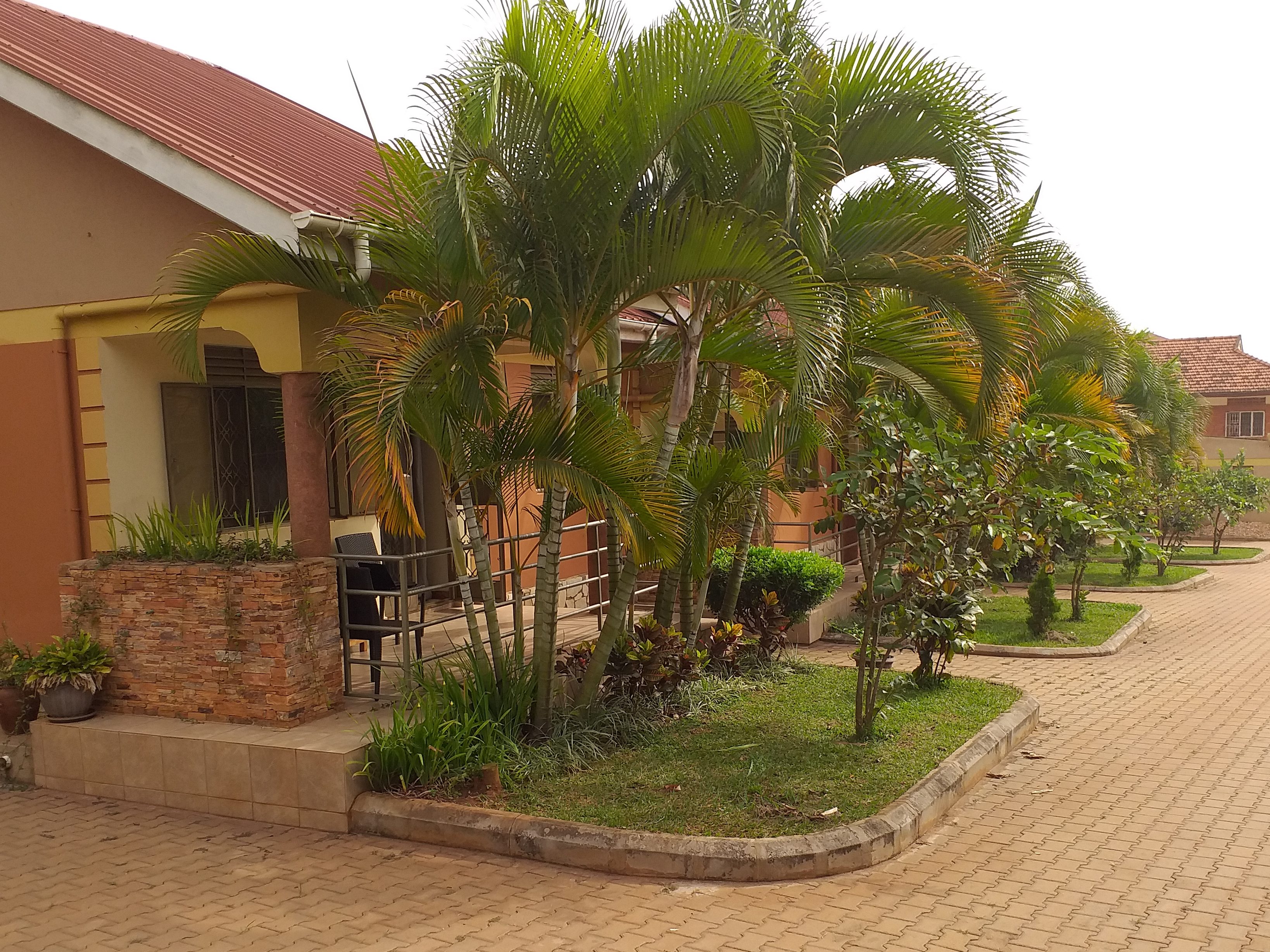
I’m in what is called the ‘Fourplex’ which is a row of 4 2 bedroom bungalows, all Acacia staff. Here is a picture giving a sense of the whole fourplex:
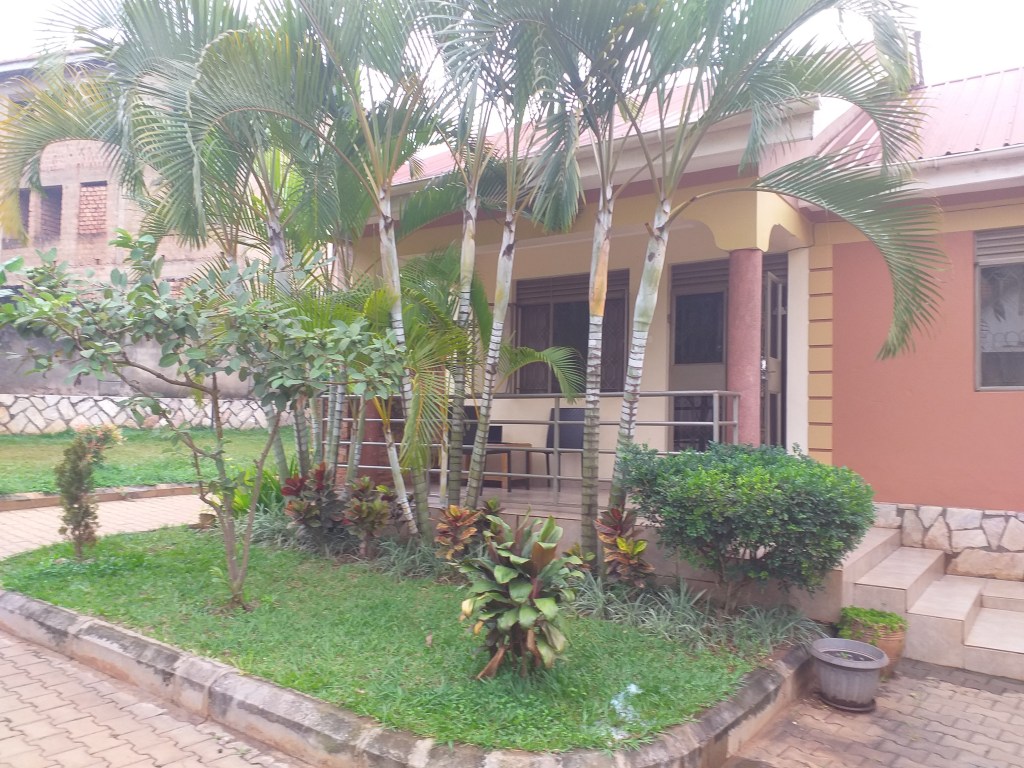
Mine is the house closest to the camera:
I’m actually sitting outside my house right now typing this post, in the shade with a bit of a breeze, fantastic!
Very pleased to introduce Dennis, one of our askari (security guards) who keeps us all safe and also has kindly been doing guest contributions for my ‘Let’s pray today!’ YouTube channel:
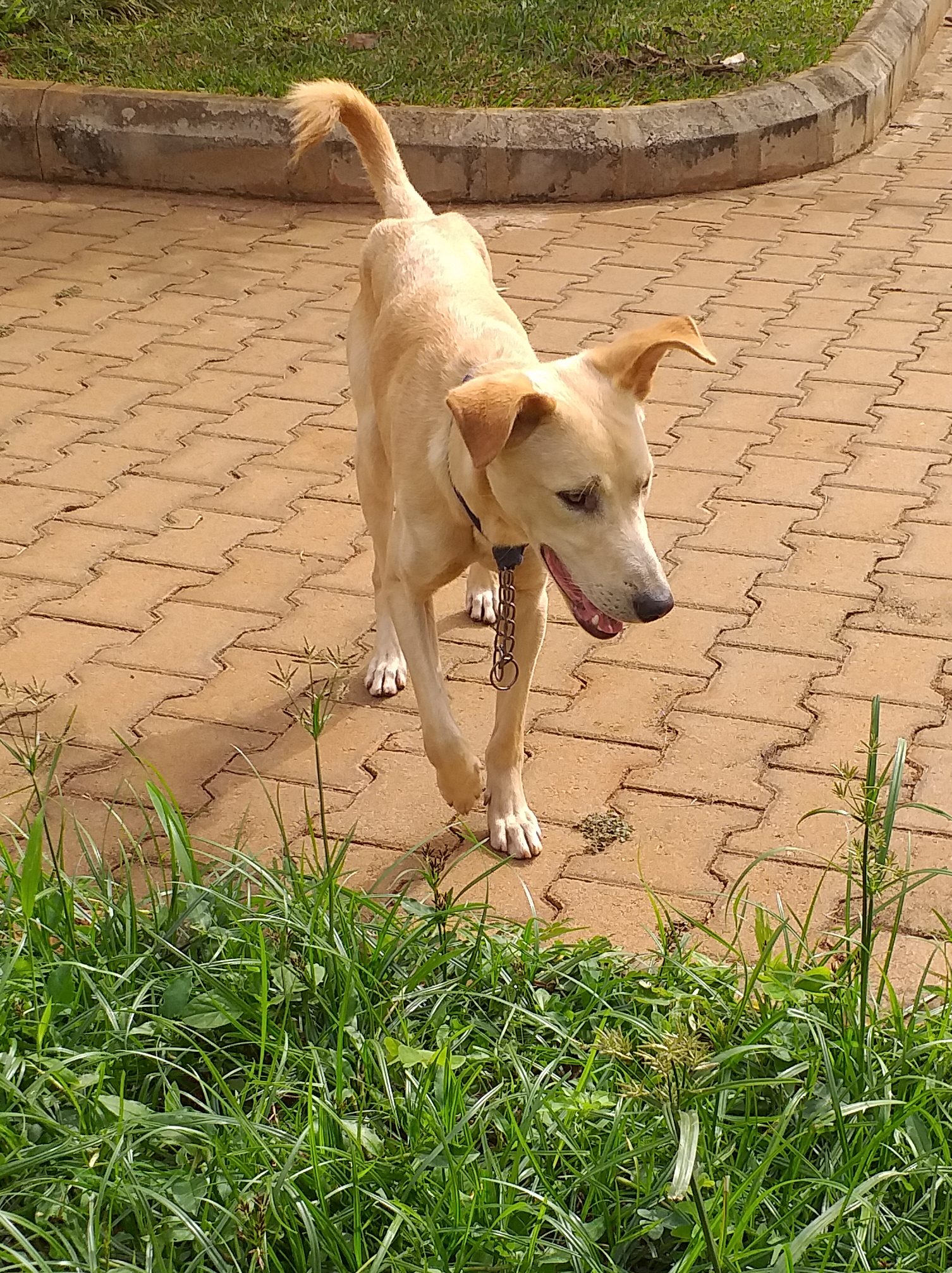
Also keeping us safe are the compound dogs Pass (to rhyme with Gas):
and his young recently arrived friend Rex:
Pass and Rex’s job is to bark very loudly any time of day or night should they hear or see (or smell when it comes to my cooking) anything unusual. This is a job they take very seriously, thanks guys! I describe them as friends, really surprised that we don’t need to get the vet out after they’ve been ‘playing’ together. Particularly, they both like being stroked, Pass can get annoyed with Rex if Pass thinks Rex is getting too much attention. I quickly learnt not to let them into the house, Pass, that is my bathroom, not yours! Pleased to say that Pass seems to have decided that he’s my personal guard dog and quite often sleeps right outside my house, if he wakes up and needs to find a new more comfortable position that can be quite noisy, but that’s fine, know Pass will look after me if any danger comes our way.
Also wanted to show you the bananas growing about 10 metres from where I’m sitting at the moment, look forward to being able to eat them soon:
I’m easy walking distance from school, church, assorted supermarkets, if I want to go further afield I call Michael who is a boda boda rider (taxi in the form of a motorbike). Hope to introduce you to Michael in a future blog post.
Think I’ll stop there for today, need to set up other aspects of the site. Look forward to being back soon, very pleased to hear from you, particularly if you have ideas of things I can be writing about. Thank you for reading!














 Geoff Tennant's Blog