05/06/22: a kindness remembered 40 years on

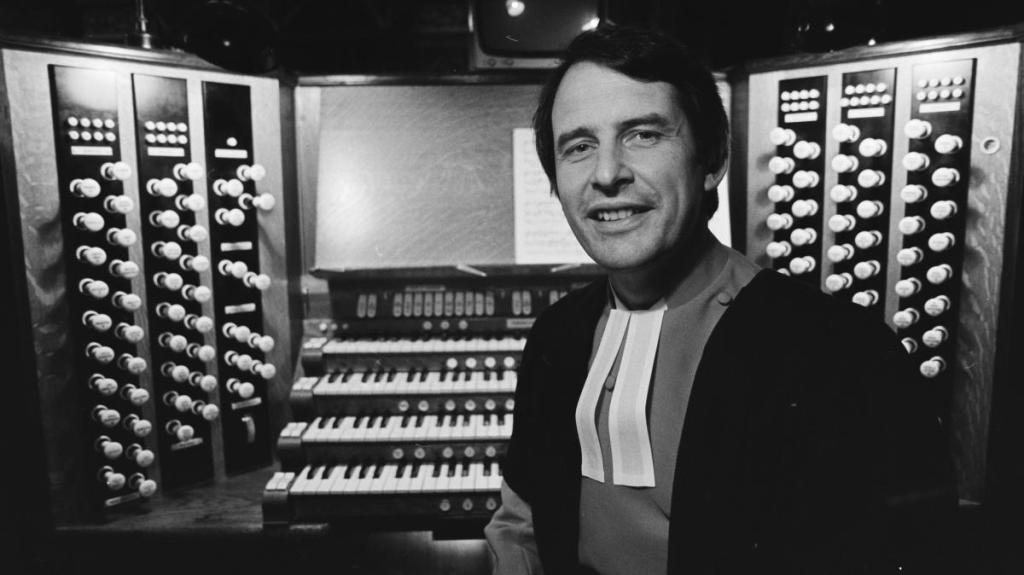
In a recent Facebook post, responding to an obituary for the late Simon Preston, I recalled how, in the early 1980s, I was practising the organ at the Royal Festival Hall (my goodness, what a privilege for a 17-year-old!) when somebody appeared silently behind me and started turning pages for me. That person was Simon Preston, Organist of Westminster Abbey. He is remembered for many things – he organised the music for the wedding of the Duke and Duchess of York, his playing of Messiaen, his compositions in the style of Messiaen – but for me he will forever be the colossus of an organist who kindly turned pages for me when I was 17.

(Parenthetical thought: even the most devoted of Messiaen fans will agree, I think, that his music is an acquired taste. I have always struggled with this concept. For example, what on earth is the point of acquiring a taste for expensive wine? Surely it makes more sense to be contented with the cheap stuff? I remember on one occasion arriving early for the Christmas Eve service at Oxford Cathedral when Messiaen was being played thinking (actually, probably saying knowing me), “Why on earth are they cleaning the keyboards now? Wouldn’t it have been better to do that before the congregation arrived?” I am aware that I am missing something important and obvious, maybe, long-suffering reader, you can enlighten me? End of parenthetical thought.)

This got me thinking about the nature of gestures, which seem small at the time but are long remembered. Another example: when my nephews were young my brother and sister in law visited me in Leicester. I was playing on the Sunday so went early, they mistimed their arrival and arrived after the service had begun. It was only later that they realised that the person who helped them find 4 seats together, not easy in a crowded church, was in fact the vicar. I confess that I don’t remember what the sermon was that day, but I’m pretty sure that they do!

I hope you’ll excuse the following anecdote on this theme. On one occasion, I was running a mathematics course for teachers in Coastal Kenya in an adjoining room to a colleague running a course on early childhood. Whilst they were two separate courses, we had the same break times and food etc. There was some confusion as to exactly where the course was to be held. So, on the first day, from about an hour before the courses were due to begin, I stood on the road, welcoming people, checking which course they were doing and pointing them in the right direction.

I would also certainly have forgotten about this, except for one thing. On the last day my early childhood colleague came up to me with a huge beam across her face. In a ‘what have you learnt from this course?’ debrief session, one of the participants, herself a trainer, said, “What I have learnt is the importance of giving participants a good welcome when they arrive.” She was used to making a grand entrance just as the course was due to begin. But she really appreciated the welcome I gave her and it made her rethink her own practice as a trainer. To be fair to her, this is one of the times when skin colour does, let’s be honest, make a difference. There I am, on a side-street of Coastal Kenya, dressed smart casual with a lanyard behaving like the lord of the manor. It wouldn’t take much imagination to work out that I was one of the trainers. But nevertheless….

Of course, the opposite can also be true. Many years ago I heard a sermon on the missionary journeys of St Paul. There is only one thing I remember about this sermon, which was the side-swipe at Sunday School teachers who no longer teach facts. I happened to be within ear shot when one of the Sunday School teachers came up to the preacher afterwards to tell him, actually, that is exactly what we do. What was doubtless a good sermon gets ruined in my memory by one single ill-chosen sentence.

And I hang my head in shame at having made the same mistake. It was when I was a young teacher in the early 1990s when graphics calculators were new on the market. I joined a team of teachers across a number of neighbouring schools who wrote materials for their use in the classroom, and ran classes after school for other teachers. It was at the end of one of these classes that I said something like, “That was a Noddy introduction…” which caused huge offence. How dare you call my efforts, in my own time after I’ve already been teaching all day, a “Noddy introduction”. I have no excuse, it was a stupid mistake to make, with many other ways of conveying what I was trying to say which would have been fine.

When I retire I intend to write a book entitled, “What’s important?” the premise of which is that oftentimes what is important in the long term may seem insignificant in the short term, and vice versa. If you have any material for me, I’d love to hear from you? Meanwhile thank you for reading, and – Simon Preston, thank you, thank you, thank you for turning pages for me, may you rest in peace.
08/05/22: I blame calculators!

The particular reason calculators are on my mind right now is because we’re in the middle of the examination season. My Grade 10 (Year 11) class did one of their papers on Friday with another tomorrow (Monday). For part of their exam I was teaching another class in a room next door which was a really odd feeling, a good reminder that ultimately teaching is not about me but about my students.

But it’s my A level classes – second part of pure and mechanics – which have had me thinking about calculators. Sometimes people will say things like, “Calculators make everything easy for kids nowadays,” but I suggest to you that this view does not stand up to examination for a number of reasons. In times of yester-year it was possible to set straightforward graph sketching questions. Now that calculators can do this for you, the questions have to be more difficult so that they cannot be solved simply by pressing a few buttons. Also, it is a basic principle of examining (not always followed) that one examines one thing at a time. If you wish to examine long multiplication, fine. If you wish to examine trigonometry, that is fine as well, but not if you are requiring long multiplication skills at the same time. So in times of yester-year, there were all kinds of ways of making the arithmetic simple in conceptually demanding questions. If a complex question yields the answer 3, it is reasonable to suppose that you’ve done things correctly. With calculators readily to hand there is no need to make the arithmetic work out easily which deprives students of that reasonableness check.

It is still the case today that, in A level papers, you can speed things up considerably with a few basic non-calculator techniques. On “Come to school as a book character” day a few weeks ago I went as James Bond complete with water pistol, which I used to indicate wrong or hesitant answers with my Grade 12 / Year 13 / upper sixth class to questions about the sine / cosine / tangent of 0, 30, 45, 60 and 90 degrees. Graduation is coming up shortly, I suspect that they might take revenge on me for this, ah well, a sacrifice I’m happy to make for their learning. Also, knowing the first three Pythagorean triples – 3,4,5; 5,12,13; 7, 24,25 – can again really speed things up with certain kinds of questions. It just feels that the ‘You can do anything on a calculator’ mentality makes students resistant to this kind of approach.

When I worked in teacher training one of the classes I ran was on the use of a calculator in which I took the view that there are three reasons why one might use a calculator in a mathematics classroom: to explicitly teach their use; when needing to do calculations when actually thinking about something else (eg. trigonometry); as a learning tool. In practice what this means is that calculators need to stay in bags unless there is a good reason to have them out. If doing eg. areas of rectangles when the numbers are straightforward, for goodness sake, let’s use it as an opportunity to do some times tables practice. My small Grade 7 (Year 8) class have taken this on board to the point where they don’t bring calculators even when I specifically ask them to do so. “But you said,” yes, you’re quite right, I did. However…..

So, when doing GCSE and A level questions myself, either alone or in front of classes, I only reach for a calculator when I can’t easily do the calculation in my head or quickly by written methods. I have harangued shop assistants in several countries for reaching for calculators to do things which can be done mentally in less time than finding the calculator, let alone working out which buttons to press.

Am I being very old-fashioned / reactionary / fuddy-duddy? I don’t think so but am not in the best position to judge. As always, any thoughts gratefully received. Thank you for reading, I’ll be back again soon!

01/05/22: getting round Kampala on the back of a boda (2)

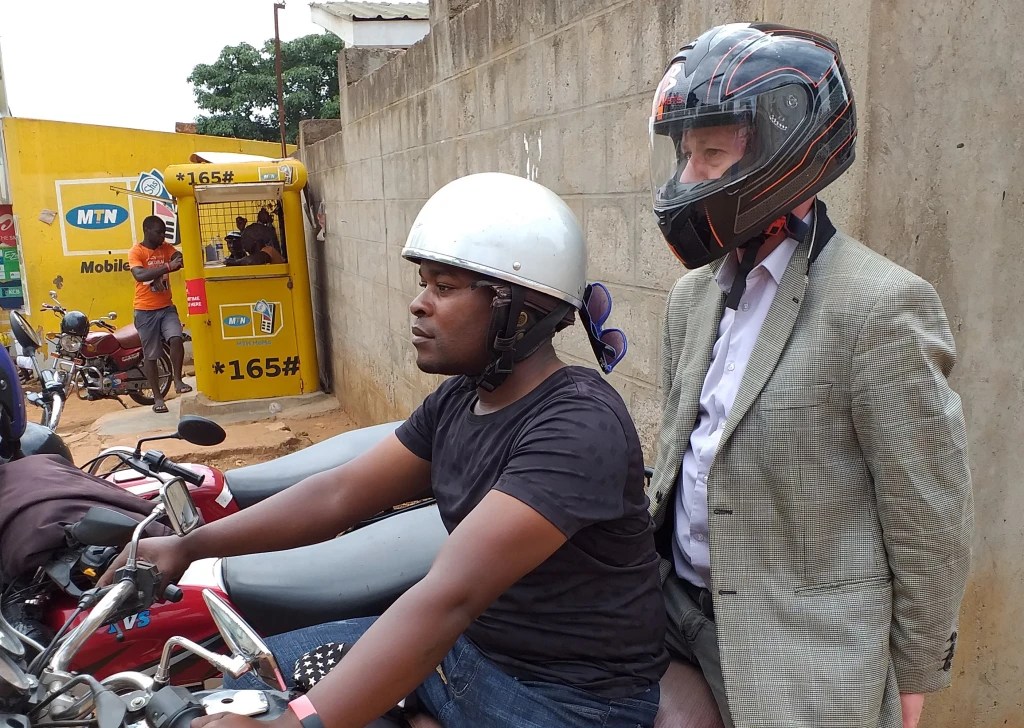
About a year ago I wrote this post about getting round Kampala on the back of a boda, or boda boda, a motorcycle acting as a taxi. It is remarkable how quickly something which starts of as completely unthinkable becomes entirely normal. A number of colleagues stop and offer me lifts in their cars if they see me walking to school (thank you, particularly, HH!) which is kind, otherwise, pretty well the only time I’ve been in car since being in Uganda has been going to and from the airport. If it’s beyond walking distance – or, in the case of going to church, if I don’t want to arrive as a hot sweaty mass – then automatically I use a boda, it’s become entirely normal.

The issue of going on a boda came up in conversation recently with a fellow mzungu (white person) who goes everywhere by car, she asked me if I didn’t find it scary? I can honestly answer no, I’ve actually been much more scared in a car in Tanzania (Mum and Dad, if you’re reading this, you may remember the incident to which I’m referring when I drove you to the airport in Dar es Salaam as you were leaving after your visit in 2013). More than anything else I like the sense of almost continuous movement, even if slow at times, whereas on 4 wheels you’re much, much more likely to be spending huge amounts of time in traffic jams.

There are a number of reasons I’ve been thinking about bodas recently. I was walking home a few weeks ago, not thinking about anything in particular, when I came to the conclusion that the maximum number of people I’d seen on a boda was 5. Then to observe a driver and 6 young children, so 7 altogether, on a boda, two of the children in front of the driver sitting on the petrol tank. For a few days after this I ran a little competition amongst colleagues and students, who has seen the most people on a boda? Whilst my student D drew with me at 7, I concede defeat to her on the grounds that one of her passengers was an adult, all of mine were small children. And whilst J’s count was a mere 5, it is noteworthy because all 5 of his were adults, with one of the passengers in front of the driver if you can imagine that. It has occurred to me to worry about what happens in the event of an accident, but try not to do so on the grounds that I need to be able to sleep at night…..

As I walk to and from school / church / supermarkets / etc. I very frequently get offered lifts which I politely decline. The frequency comes up very noticeably when I’m carrying a helmet, either because I’m on the way to school intending to go somewhere afterwards, or on the way back from church having taken a boda there. I can see from a boda driver point of view, struggling to make a living, that it is annoying to see wazungu walking when, as they would not entirely unreasonably assume, they can afford to pay the fare (which is remarkably low by western standards), and even more annoying when the mzungu is carrying a helmet – why on earth would you do that if you don’t want a boda ride? Have to say, my polite refusal is almost always accepted very graciously, thank you guys, I fully understand that making a living is tough.

I was slightly bemused, a few weeks ago, when I was offered a ride by a driver who had an assistant, a young child sitting up front. And also on the occasion when I was offered a ride by a driver who already had a passenger, a security guard complete with rifle. But you have a passenger, says I. No, he’s arrived at where he wants to go, shall we go? No thank you, says I, I want to walk. A couple of minutes later the boda overtakes me with the security guard back on. But you said that he…. Probably better not to overthink this incident.

If you come to this part of the world, do bring a helmet with you and experience this way of getting around, it has a great deal to commend it. And, in conclusion, my thanks to Michael, my original boda driver who is now working in the Middle East, and Vicent who is the first person I call when I need a ride now. Vicent, you are fantastic. If I ask you to come at 9am then I don’t bother to check, I just go to the meeting place at 9am and there you are. You drive really well. You wait for me if I’ve gone some distance however long it is that I need to be there. On the rare occasion when you are not available, you arrange for a colleague to come instead. From the bottom of my heart, thank you for all your help, I really appreciate it.

Meanwhile, to all my Muslim readers, a very happy Eid celebration to you all. And to those in the UK, enjoy the bank holiday. Thank you for reading, I’ll be back in touch again soon!

24/04/22: book review, “15 ways to a more effective prayer life” by Selwyn Hughes

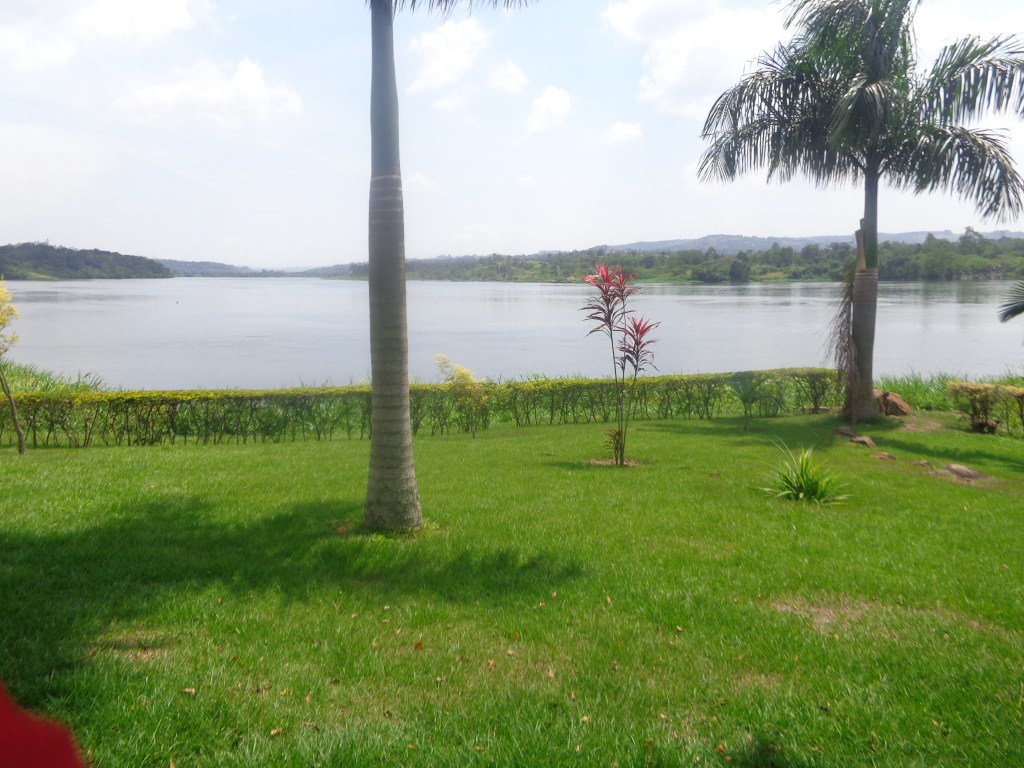
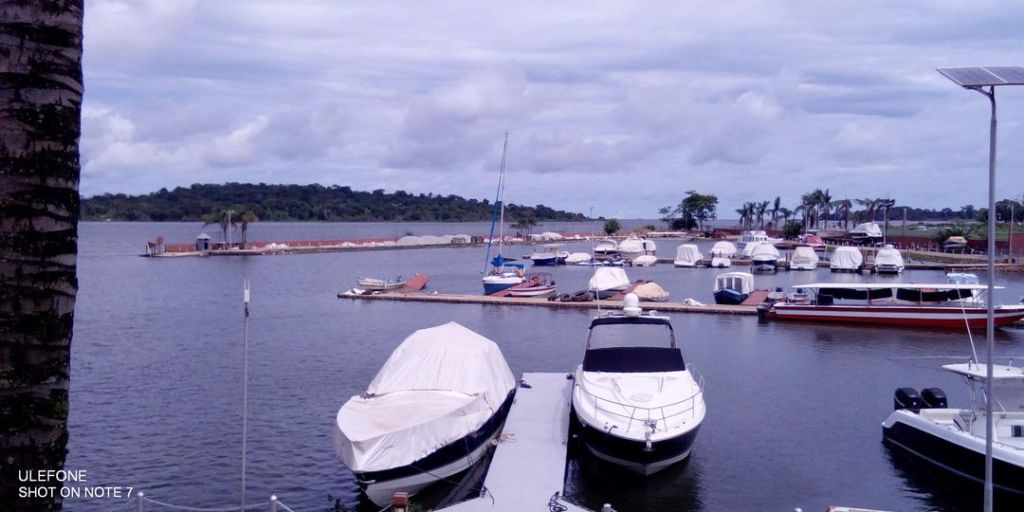
You may have seen my Facebook post from Speke Resort Hotel, on the shores of Lake Victoria heading towards Entebbe. Not something I’d do very often or for very long but it was very nice, if you missed it, please see below the view from my private balcony:

A bit of time off, combined with the fact that my Kindle isn’t working properly at the moment, means that I took with me a couple of actual books, including the book about prayer in the title. Which I read in its entirety while waiting for a cup of coffee. The book is quite short, and I was reading it quite fast, and the wait for the coffee was pretty long, I have to say, I thoroughly recommend it, it sets out some basic principles really clearly.

Some years ago I was organist at St James’s Church, Muswell Hill, North London. The vicar at the time was Rev Alex Ross, now retired, who was able to encapsulate really important truths in just a few words. I remember a number of things he said, including, “My problem with the Bible is not with the bits I don’t understand. No, my problem with the Bible is with the bits I do understand.”

I feel a bit like with that with prayer, at the same time it’s so simple and so difficult. Hughes’s 15 points include: start with a prayer asking for a help with prayer, find a quiet place, read the Bible alongside. But the one which struck me particularly was: pray with a notebook to hand. In this blog post I wrote about praying with my laptop to hand. For the last few days I’ve been using the back of what I call my ‘day book’ – ie. hard backed exercise book which I use to write down anything which needs to be written down – notes from meetings, shopping lists, things to be done, solutions to A level problems, whatever – to write notes while I’m praying. As a means of helping to keep thoughts from wandering I’m finding it really helpful. And, somehow, the act of handwriting -almost illegibly, of course – itself feels like an act of prayer.

So this morning my reading through the Bible in a year takes me to the beginning of the story of Samson in Judges, to which my scrawled comment is, “Such an idiot! Yet God still worked through him. Hallelujah!” Possibly I’d need to brush up the language if giving a sermon on Samson. Maybe.

Speaking at school chapel under the heading, “Judge not lest you be judged on Thursday, I have a draft ready which I’ll record on my YouTube channel so please do watch out for that. Meanwhile, thank you for reading – and if you have any thoughts on how to make prayer a daily meaningful reality, please do share!

17/4/22: school is returning to normal!

A very happy Easter to you as we celebrate the resurrection of our Lord Jesus Christ. Hallelujah! With a week off school. Hallelujah once again!

Meanwhile, at school there is a very satisfying sense of things returning to normal. Since the beginning of the pandemic, when school has been in session on site, we’ve adopted the practice of students staying where they are and teachers moving around. It is just in the last week that we have gone back to the normal practice of students going to their teachers – except, of course, this is not normal for our two youngest year groups, I was on duty first thing on Wednesday morning and there was a definite sense of anxiety in the air as students geared up for the change.

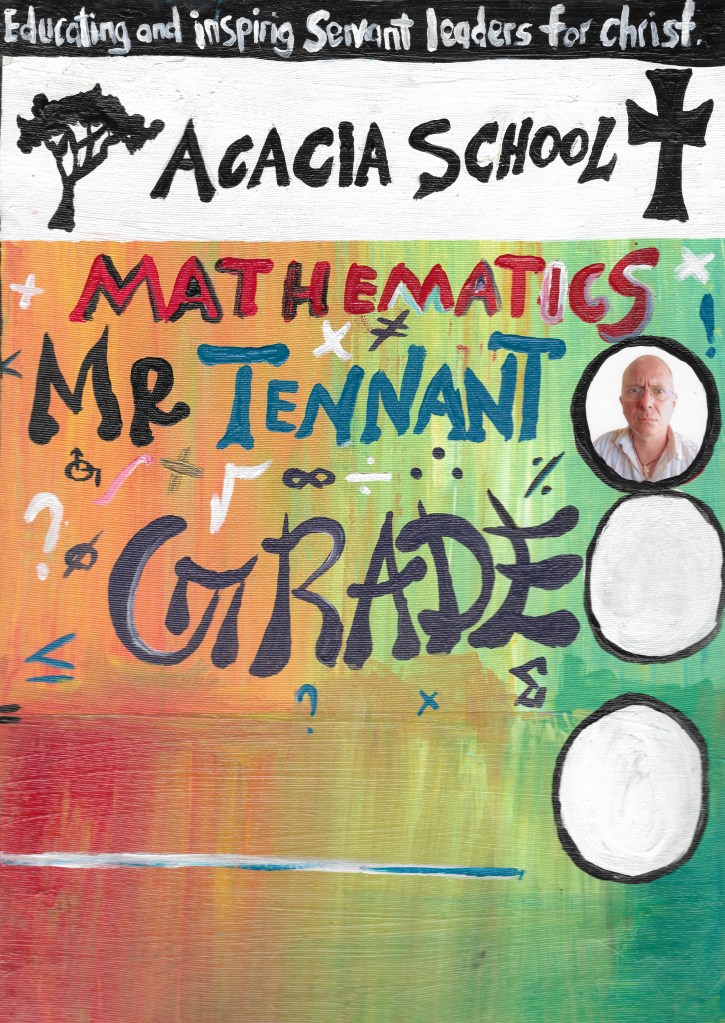
Also, the practice of giving students covers for their exercise books had lapsed to some extent, until a couple of weeks ago it had not registered with me that this was expected. But it has now! So, thinks I, what am I going to do about this? But just a moment, I know the best artist in Kampala, Stanley Bia. So I got in touch, told him what I was wanting, and the result is as you can see it at the top of this blog.

As you can there’s a scary picture of me – don’t mess with this teacher! I have been asked if it is acceptable to draw moustaches etc. on this, I suppose this is OK….

Then a space to put their grade, if they wish simply to write the number that’s fine – or a suitable array of dots, or an equation which solves to their grade number. Some of my students have really gone to town with this, it takes a considerable amount of work to come to the conclusion, for example, that they’re in Grade 9. Hope this doesn’t cause too much of a problem next time exercise books are taken in by senior staff for a book check…

Then space for their name – how to write it on their mathematics exercise book? Noting that the ‘G’ for ‘Grade’ incorporates the symbol for pi. And then a space for students to indicate how they feel about the mathematics classroom. A smiley face? A frowny face? An exclamation mark? A question mark? You decide!

I gave out grey scale copies on light blue paper, indicating that if they did a good job I’d make them a colour copy, and if they did the best job of all the students I teach they can have the original painting. So I’ll be picking this up again when we return week after next. Meanwhile, thank you for reading and enjoy the long weekend!

03/04/22: student as teacher – and green pens….

It’s a great privilege at Acacia School that we’re able to split what are already, by UK state school standards, small groups, into 2 for mathematics, which we call ‘core’ and ‘extended’. And I’m really enjoying teaching Grade 7 (Year 8) core, a group of 8 students. They may not find the subject easy but my goodness they’re prepared to work hard! They show every sign of really enjoying the settler (please see this blog post) and get annoyed with each other if somebody blurts out an answer which they’ve already reserved.

They also really like coming to the white board, either in conversation with me or to talk to the whole group. What is noticeable is that, when they come to the board to explain things to the rest of the group, they become far stricter than any teacher would ever dare to be. So, a single eyeball out of place gives rise to a lunch time detention, whilst a sneeze gives rise to the response to, “You’re panelled”.

Just to explain – students serve lunch time detentions for minor offences, these are organised extremely quickly after the offence, even on the same day, which from a psychological point of view in keeping the offence clearly attached to the consequence seems to me to be excellent. If students are given 4 or more detentions within a set period of time, the view is taken that detention does not seem to be getting the message across so a panel is established including the student him/herself, parents, and senior members of staff, to discuss what is going on, what needs to change, and what support needs to be offered. This is ‘being panelled’. A clear and proportionate escalation from detentions, I would suggest – but probably a bit of an overaction to a sneeze.

I remember when I was working in initial teacher training and also volunteering as a Sunday School teacher for the 5-7 year old group in the church I attended at the time. It came out on one occasion that my job was teaching teachers which they found extremely funny. One of them, wagging his finger vigorously, said, “Do you teach them to do this?” Actually, I said, I teach them not to do that – but I’m not sure that the children fully believed me.

It is curious how stereotypes as to how teachers behave persist, maybe when I retire I’ll consider this point further. Meanwhile, any thoughts on this point gratefully received!

One other thing from school. As we return to normal after COVID a number of routines are being re-established, including the idea that, when students mark their own work, they do so with a green pen. Teachers were invited to go the school office to take as many pens as we needed, I decided that I needed 15, aware of the responsibility which goes with it. I was convinced that I was going to be losing them constantly so have over-compensated, counting them out loudly and glaring at students as they take one, making it clear that I expect at least 1 back at the end of the lesson. Grade 7 students are now refusing to borrow them from me on the grounds that the responsibility is too great. Meanwhile, having started with 15 I’m currently on 18, not entirely sure how this is happening but if people do leave them lying around….

I’ve also been thinking further about bodas recently but I’ll leave that now for next week. Thank you for reading, trust you have a good week in store!

09/01/22: banana trees are fascinating!

One of the many great joys of spending time in two very different countries in different continents is the sense of awe and wonder at things which would seem entirely normal if one only ever lived in one place. Occasionally this happens going back to the UK, I well remember returning from Dar es Salaam having been away for over a year being totally perplexed by zebra crossings and drivers actually stopping for me. I mean, what’s going on here?
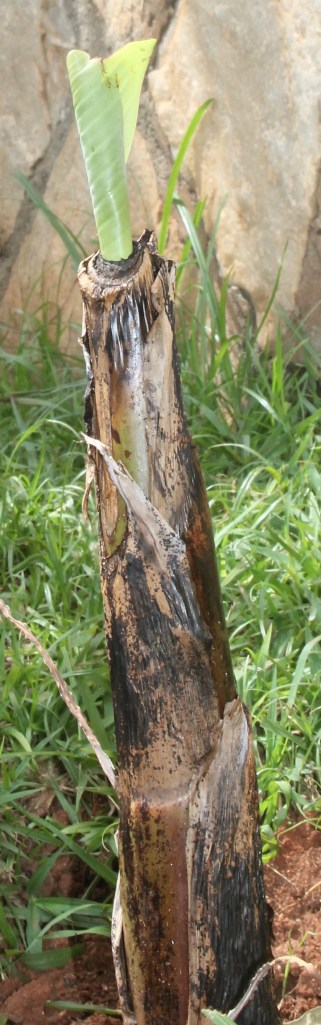
So for me, having banana trees growing 5 metres from my house is just amazing. Fantastic! And watching them them over the course of the year has been really interesting. On the one hand they look very fragile, like over grown pieces of grass. Yet their tenacity for life is wonderful, the picture above seems to me to convey a sense of new life arising out of old. I feel a sermon illustration coming on, but am very aware that good practice is to work out the point one is making first and then find an illustration. However….

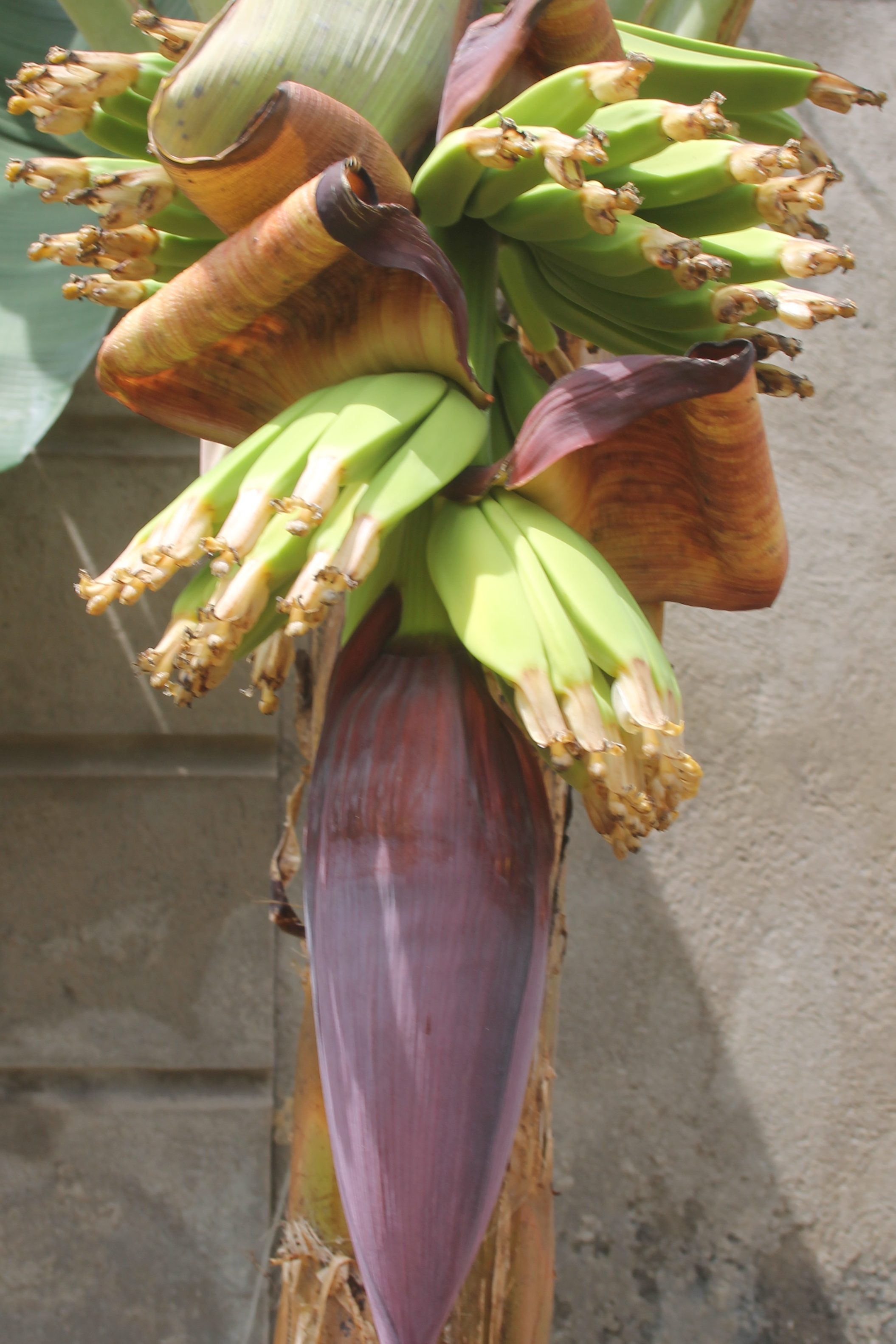
This is what immature bananas look like:

And here we have a new leave unfurling:

Quite who the bananas belong to when they are ready for harvesting I don’t know, I come back from school and they seem to have disappeared. Similarly, who has the passion fruit growing right outside my house?

With lovely flowers attracting bees:

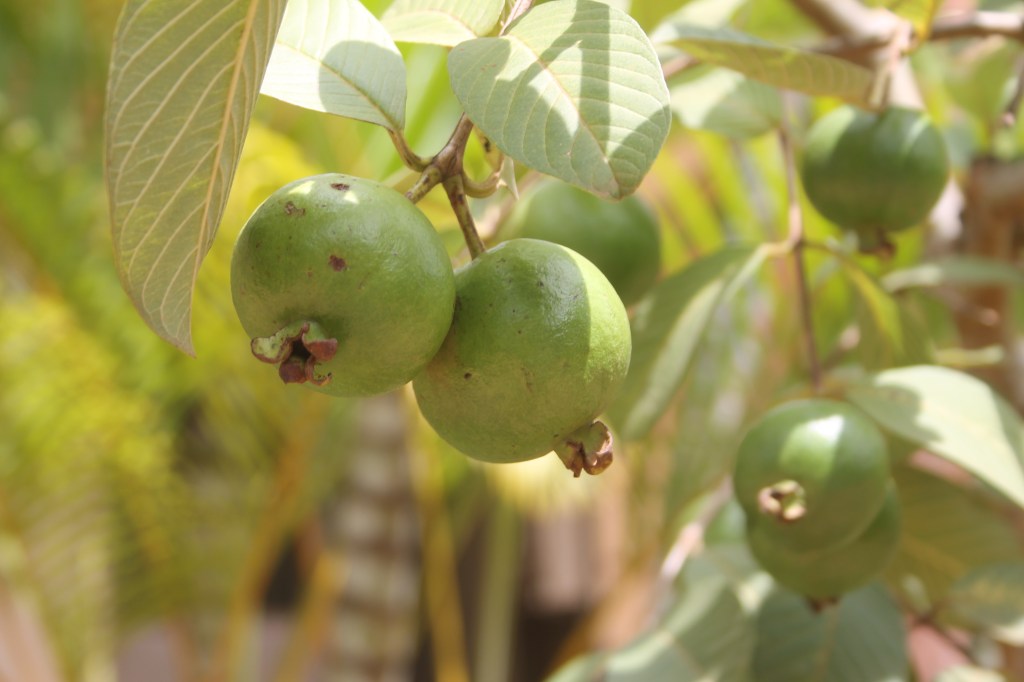
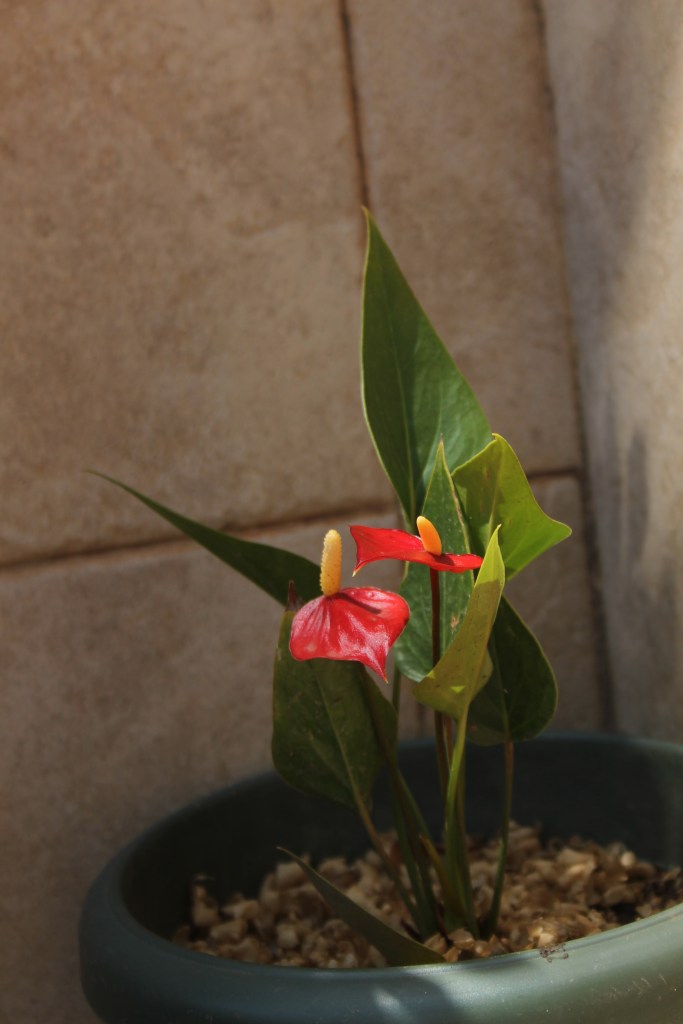
While on the theme of plant life let me show you two recent acquisitions:

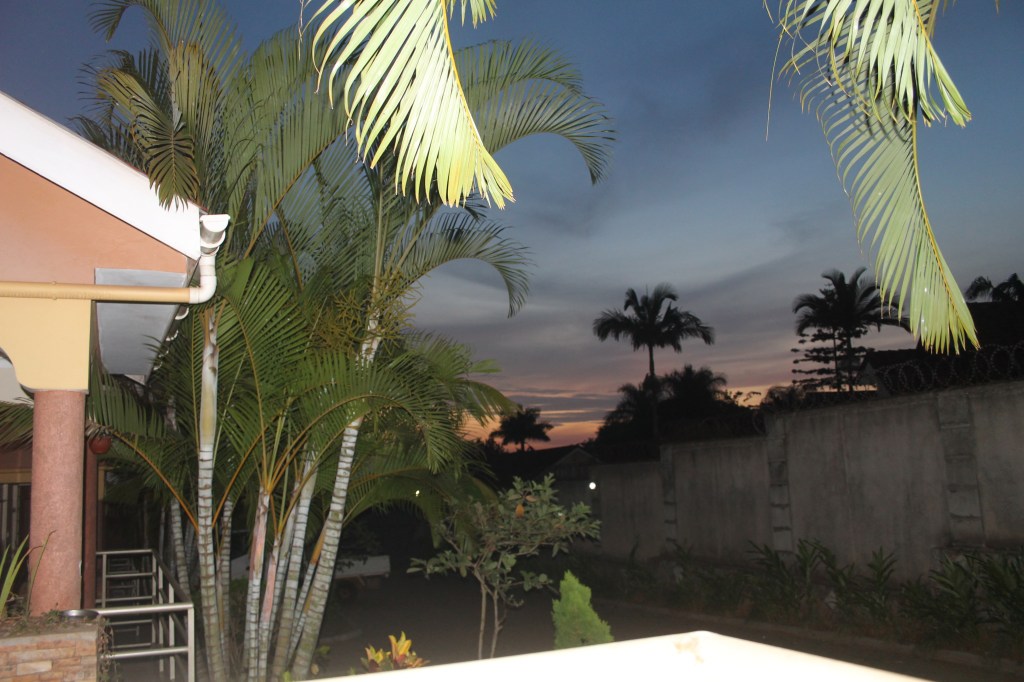
Any advice on looking after them gratefully received, previous experience not good I’m afraid. And also, I tried to capture the early morning light from just outside my house, tell me how well I’ve done!

Thank you for reading, much appreciated, if there’s anything you think would be interested to know about, please let me know! Meanwhile, tomorrow (Monday 10th January 2022) is an important day here in Uganda as schools return, in some cases for the first time in nearly two years. At Acacia School we’re expecting all year groups back, I would say it’s been noticeable walking around over the last few days that there has been painting and decorating going on in local schools which has been really nice to see. Please pray for us,t this is a much needed step, we ask our Almighty God that there be no going back to lockdowns. At all times and in all places, to God be the glory!

02/01/22: a brief trip to Jinja

A very happy new year to all my readers, may 2022 bring peace, happiness and fresh purpose. Thank you for your support, look forward to keeping in touch in the new year.

Between Christmas and new year I took myself off to Jinja for a few days. Jinja is, I think, the closest tourist resort to here, certainly there’s a strong sense of getting out of Kampala which is really nice.
So, how to get there? There’s no system of public transport here, instead there are vast numbers of taxis as they’re called – 15 seater minibuses with 5 rows of 3 seats, the 3 middle rows having a fold down seat which needs to be up to allow people behind on and off. Below is a picture from the Internet.

You can see in the picture the conductor, one thing which becomes apparent when on the taxi is how hard the conductor works! Constantly on the look out for new passengers, helping people with their luggage – which sometimes is voluminous in the extreme. When full they are a little crowded, with children there may be more than 15 people. But the price is extraordinary – a journey of 80km or 50 miles costs UGX 15 000 which is just over £3. So you can’t really complain if at times things are a bit slow or it gets a bit crowded. I looked at an alternative on the way back and was being quoted a price 8 times this. No, let’s stick to the taxi, that’s what I think.
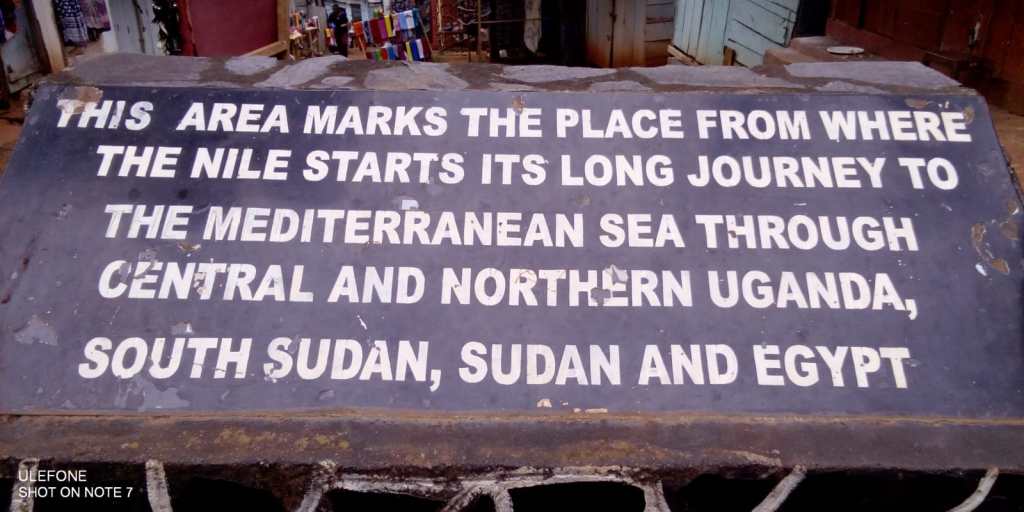
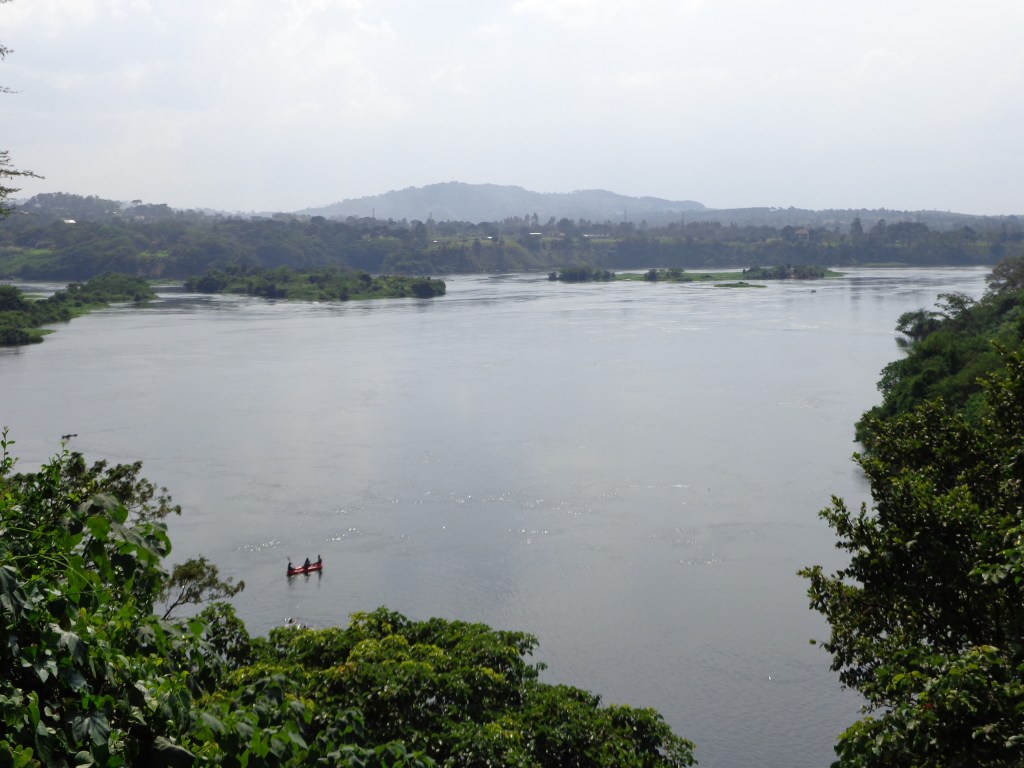
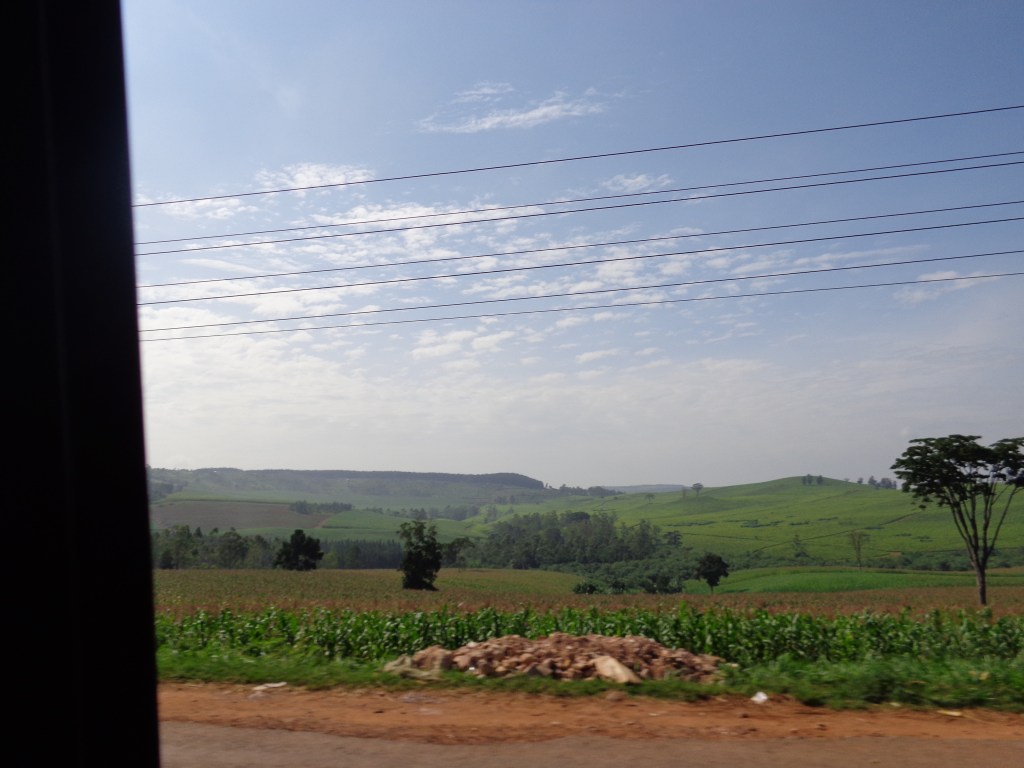
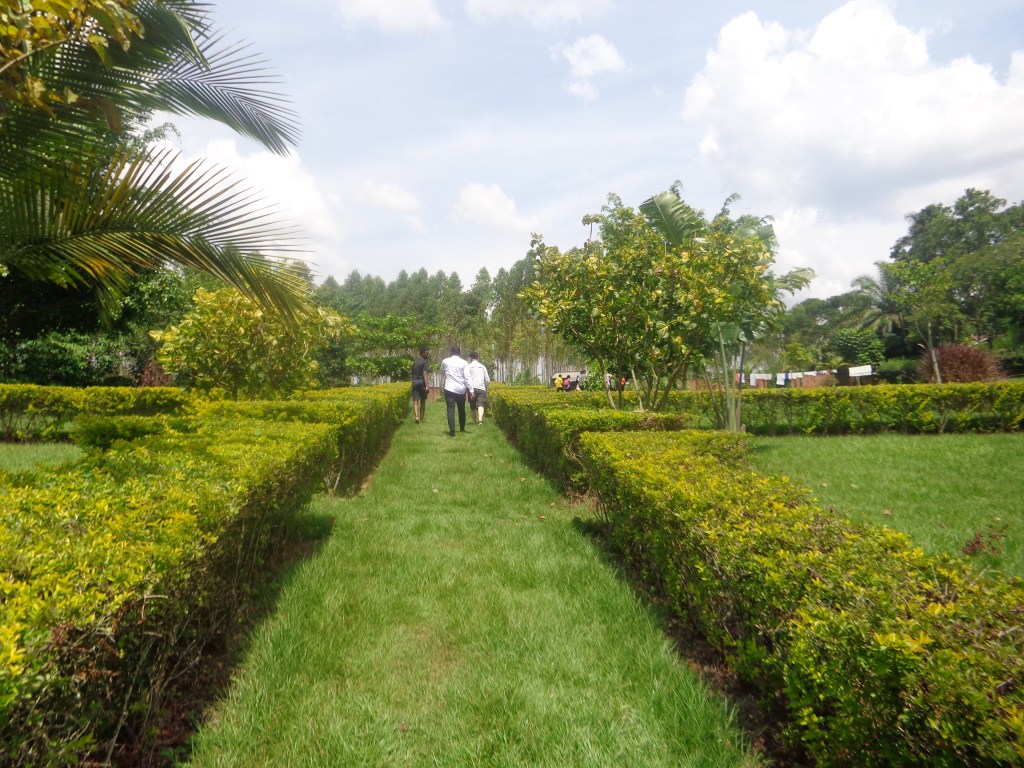
Of course, Jinja is best known as the source of the Nile, the scenery is just stunning, not sure that my pictures does it justice:

The last picture shows the island which is where the River Nile is deemed to begin, nearer the camera is the Nile, beyond the island is Lake Victoria.

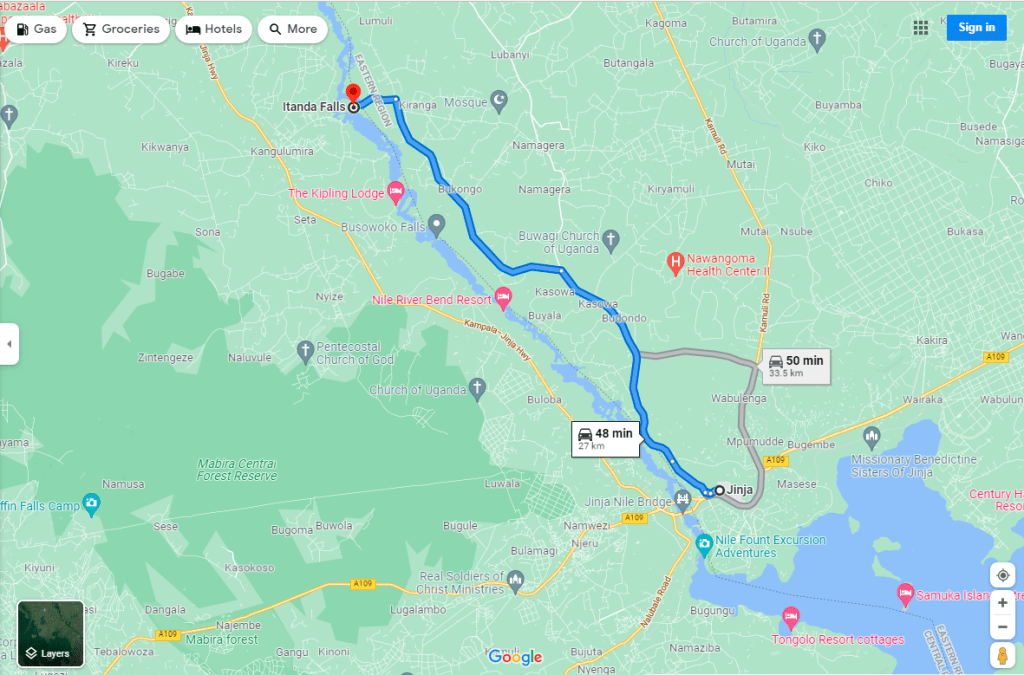
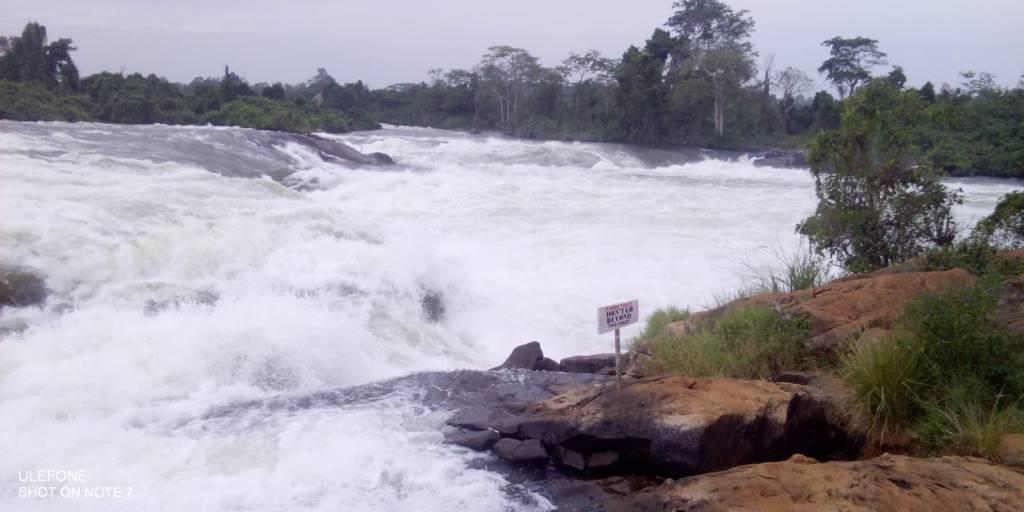
I was also able to visit Itanda Falls, about 27 km north of Jinja:

As I hope this

I’m told that a number of other white water areas have disappeared over the last few years due to damming raising the water level. Not in a position to comment on this, if this is so, then I would wonder not just about the beauty but also the environmental impact of destroying local phenomenon.

Whilst at the falls I engaged in the ancient art of ‘make an idiot of the tourist’, please enjoy!

Getting to the falls required a lengthy ride on the back of a boda (motorcycle acting as a taxi), I left some of the dust on the road, honest!

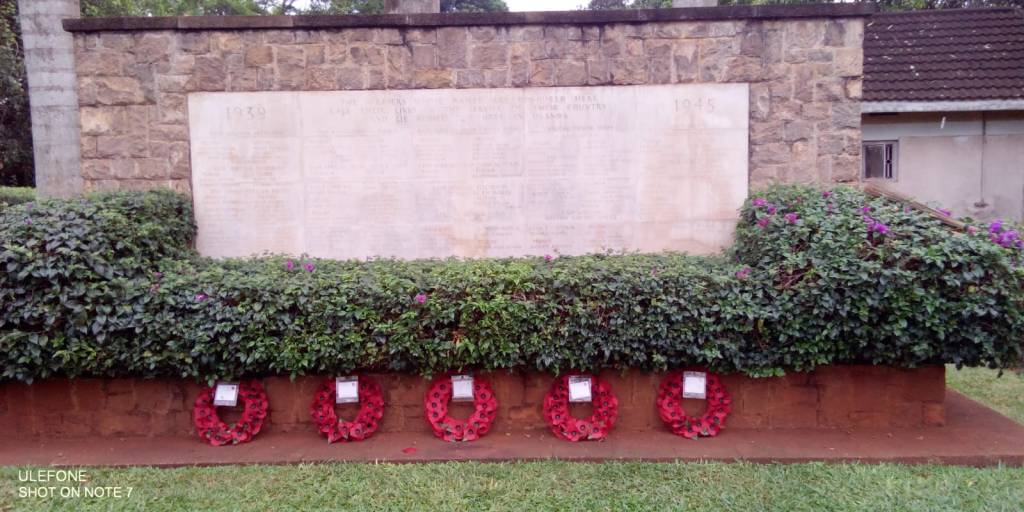
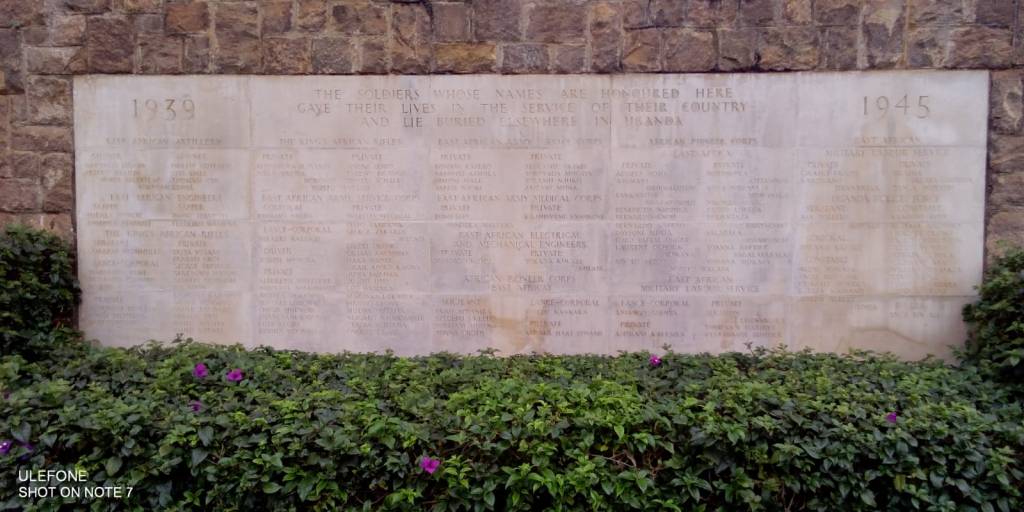
Another thing I was able to do in Jinja was visit the Commonwealth War Cemetery in the centre of Jinja:

Looking round made me realise that I know nothing about the African involvement in the First and Second World Wars, but I would say this. As far as I can make out, having been born 20 years after the Second World War, there was, from a British point of view, a very clear rationale for the conflict, a definite sense of fighting for freedom over tyranny. Which I hope brought comfort and peace both to those fighting and their friends and families left behind. Did Private Abel Ayo know that sense of purpose, I wonder?

Or – was there a sense of fighting other people’s conflicts? I really don’t know, I may revisit this issue in future. Or do please write a comment if you know more about this than I do.

So, back in Kampala, full teaching day on Wednesday so need to get head in gear for that. Pleased to be able to get away for a few days, let me finish with perhaps my favourite picture from near the source of the Nile. Thank you for reading!

12/12/21: Christmas greetings!

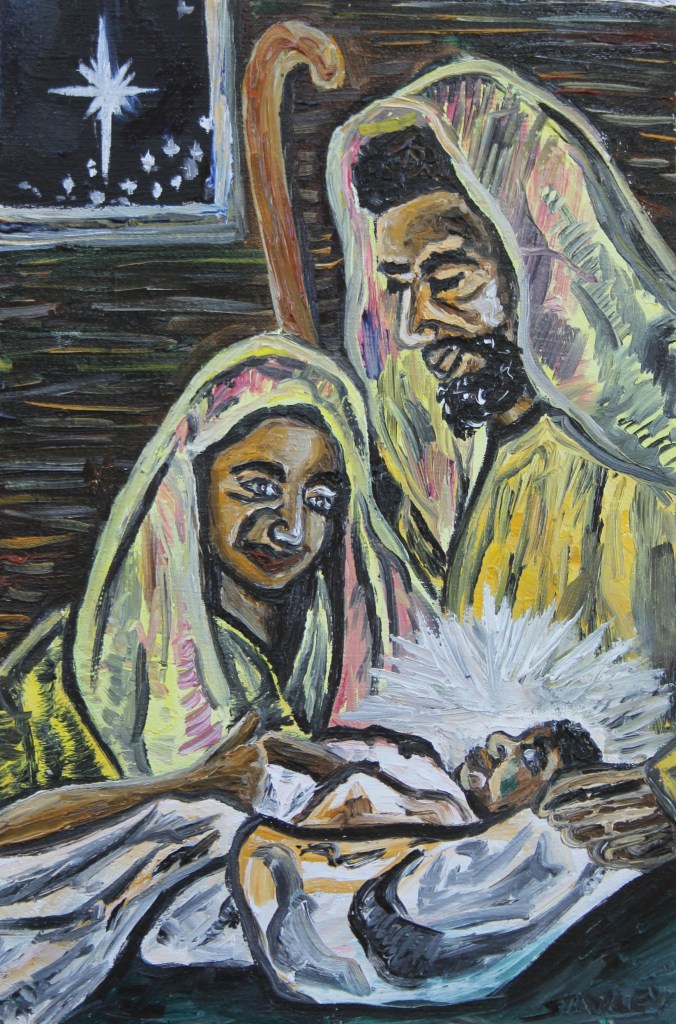
Picture by Stanley Bia, stanleyartbia4@gmail.com

My very best wishes to all my readers for an excellent Christmas and a happy and prosperous 2022. My hope and prayer, particularly here in Uganda which has seen one of the highest rates of school closure in the world, that 2022 will bring us back to some semblance of normality as we, I pray, move on from the pandemic, perhaps more aware of forces beyond our control.

As you know I help to support 4 homes for vulnerable children as set out on this page of my website. I would love them to have a really good dinner this Christmas! This will cost a total of $1500 or £1200. I would be really grateful for any donation you can make towards this target. For giving options please go to this page or email me at geoff@geoff-tennant.com for other options. Thank you for reading from us all!

28/11/21: please check out my YouTube channel!

Over the last two days I’ve updated each of the sections on my YouTube channel “A minute a day to pray” and thought it was a good time to encourage more views!

I started the channel in January of this year, aiming to put a one minute video up each day with a Bible reading and prayer. I’ve not been 100% consistent on this, intention now is to record prayers in batches with a better quality camera than I have on my laptop. Many thanks to people who encourage me in this, RG, you know who you are, thank you particularly! It helps me with my own prayer life so that also encourages me to keep going. Guest contributions very welcome, although am keen to keep to house style – Bible reading and a prayer all within a minute. Please note that I have already recorded the next few prayers, looking at the practical wisdom found in James.

(Parenthetical thought: I was doing some digging on the Internet a few weeks ago to prepare for a short class on Christian attitudes to entertainment, and came across the American Christian comedian Michael Junior. I think his videos are really, really funny. See this video where he reflects what it must have been like for James to be Jesus’ brother. End of parenthetical thought).

I’ve also uploaded Christian talks under the heading ‘Thoughts from the Bible’, the most recent being a talk I’m due to give on Thursday at school on gambling:

I don’t have any further ideas in the pipeline right now, I’ll keep you informed! Happy to take suggestions – and guest appearances.

As I mentioned in this blog post I have long been a fan of the 1973 hymn book ‘Psalm Praise’ and, now that I have a piano and my copy of the book, am recording some of my favourites at the rate of one a week. Current is a setting of Psalm 1, “Blessed is the man”:

Very aware that I am a rather better pianist than I am singer, would so love to work with a singer on this! But for the moment you’re stuck with me, sorry. Please concentrate on the song itself rather than the singing – please!

And then the last section I’ve entitled ‘My music favourites’, so far it includes a rewrite of Leonard Cohen’s Hallelujah as detailed in this blog post with the most recent being, “Gone but not forgotten”, a piano solo piece by Rick Wakeman which I think is hauntingly beautiful, hope my rendition is up to the task:

The next project I have in mind is a rewrite of Frank Sinatra’s “I did it my way” to become either “I did it Your way” or “I did it His way”. Idea is to keep the premise of the song – reflections of a person lying on their death bed – and make it a specifically Christian song. Any help on this gratefully received.

So, please do check it out! Given what I am already doing, any ideas gratefully received. Meanwhile, delighted to say had a superb time in Jinja with my Grade 10 Home room (Year 11 tutor group in UK speak) Tuesday to Thursday last week, students were magnificent. You’ll appreciate it’s not appropriate to upload photos of students, please see some pictures of the Nile and where we were staying. Thank you for reading!