
Kampala literally means, “Hill of the impala” and was originally built on 7 hills, increased urbanisation means this is now 28 – depending on exactly where you draw the city lines. When actually in Kampala these hills are very obvious, more so than in the photograph above, taken from the roof of the school when it was raining, and the same camera angle when it was not:

Walking the short distances from where I’m living to school, church, supermarkets etc. I’m constantly going up and down hills, meanwhile, it’s entirely normal to see – but not hear – motorbikes free wheeling down hills, and vehicles of all shapes and sizes struggling to get up them. Going back a few centuries, building a city on hills makes perfect sense from a defence point of view, and the proximity of Lake Victoria giving a huge supply of water made it an ideal location.
Meanwhile, it’s been raining! Having now been here for 6 months I’m still yet to work out any clear patterns as to when it rains and when it doesn’t, it seems to have been raining on and off ever since I’ve arrived. And when it does rain it is often much more intense and long lasting than is normal in the UK.
To cope with this there are a system of open storm drains:

This is by no means the fullest I’ve seen these drains when it is raining hard. I would say also that, combined with only a small amount of street lighting, these drains are one of the reasons I make it a rule not to walk on the streets during darkness hours.
So, a city on hills with a network of open storm drains which can then empty into Lake Victoria means that things should be fine, shoudn’t they? Well, up to a point this is true, but there are two further factors here. Firstly, the infrastructure takes a considerable hammering from the rain, and it’s very easy to forget just how heavy water is. So in the classroom we might teach that 1 litre of water weighs 1 kilogram which is of course true, but when we look at water I don’t think this really sinks in. According to my calculations, for example, the water contained in an Olympic sized swimming pool weighs about the same as 5 fully loaded Jumbo jets.
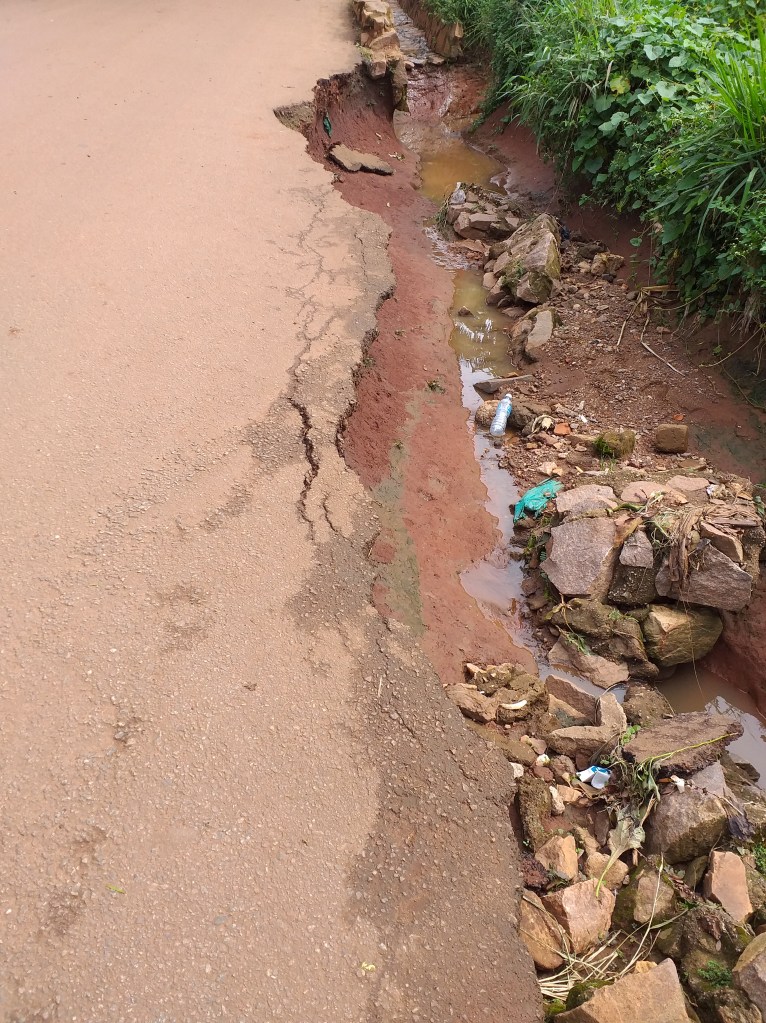
So, on my daily walk to school, there is a stretch of road whereby the open storm drain is eroding away, it is alarming to watch its progress over time:
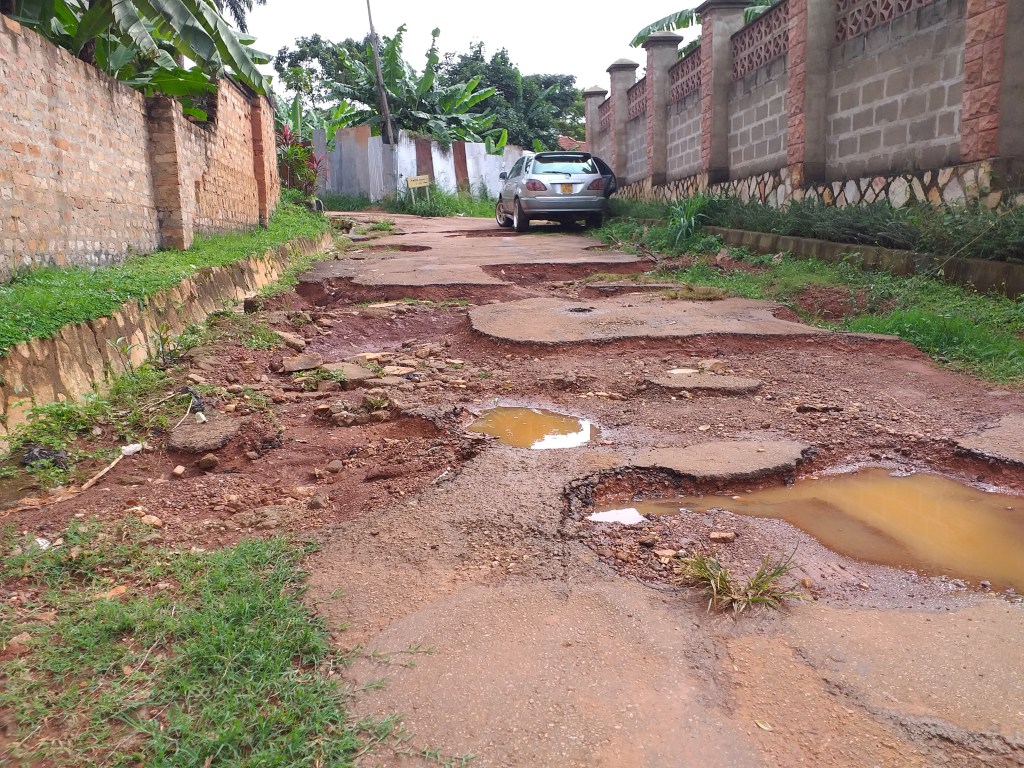
Also the roads have been deteriorating, when I look at the below I am grateful that I am not running a car, much easier to navigate this kind of surface on foot than on motor vehicle, with two wheels being more manoeuvrable than four or more:
In Dar es Salaam there was a programme of road maintenance once the rainy season came to an end, I’m hoping the same is true here – although, as I said above, I’ve yet to get a sense of rainy and dry seasons.
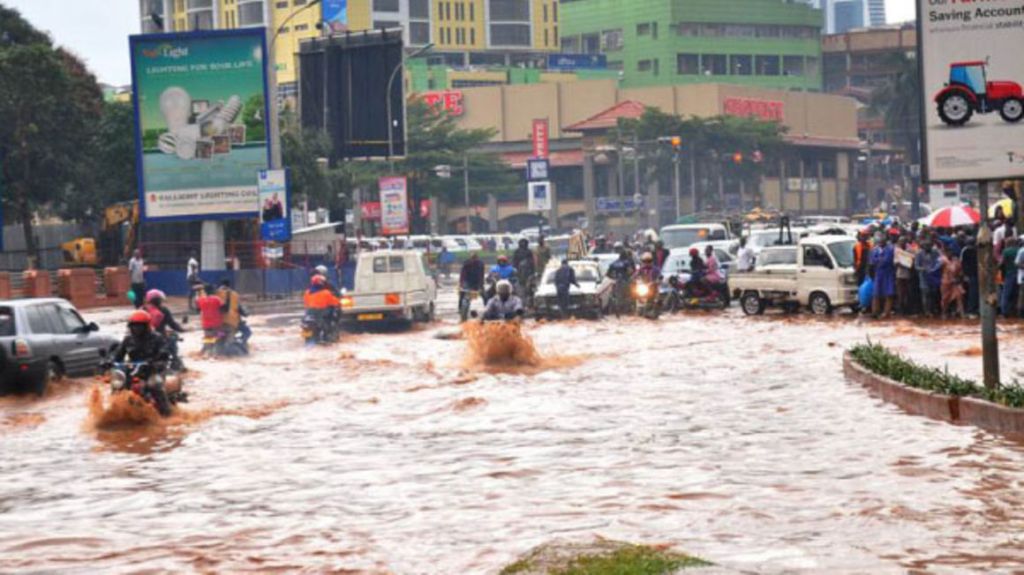
Alongside the damage to the infrastructure by the heavy rains is the fact that huge quantities of water can do massive damage, particularly, in the valleys, before finally reaching Lake Victoria. The following pictures I got from the Internet, the first near a huge supermarket which I visit occasionally:
and the next from Ggaba which is not far from here, it did worry me driving in rains in Dar es Salaam that you cannot see the surface of the road to know whether you’re driving over pot holes or into storm drains:

Every time it rains I find myself grateful that I am fortunate enough to live and work on hills. But as I watch the rainwater going down the hills in the open storm drains I’m very aware that this water does not go straight to Lake Victoria – and it won’t surprise you to hear that it’s not relatively rich people who live and work in the valleys.
Water is, of course, essential to life of all kinds, bringing great beauty and recreational possibilities. At the same time it brings enormous potential for erosion and destruction. Let’s remember in our thoughts and prayers the people most vulnerable to this destructive power, and the leaders of the country as they navigate multiple demands in building and maintaining the infrastructure needed for a safe environment for all.
 Geoff Tennant's Blog
One thought on “1/5/21: it’s been raining!”